How to Quickly Learn Number Combinations
If you’re aiming to master basic arithmetic, knowing the products of numbers from 1 to 12 is crucial. Regular practice with these calculations enhances mental math skills, leading to quicker problem-solving in various contexts. It is one of the most fundamental skills that kids and adults alike can benefit from.
Multiplying from 1 to 12
- 1 Times Any Number – Simply repeat the other number. For instance, 1 x 8 = 8.
- 2 Times Any Number – Double the number. For example, 2 x 7 = 14.
- 3 Times Any Number – Triple the number. So, 3 x 6 = 18.
- 4 Times Any Number – Multiply the number by 4. For instance, 4 x 5 = 20.
- 5 Times Any Number – This can be easily found by halving the result of 10 times the number. Example: 5 x 9 = 45.
- 6 Times Any Number – It’s double the result of multiplying by 3. For instance, 6 x 7 = 42.
- 7 Times Any Number – A bit trickier but still manageable. For example, 7 x 8 = 56.
- 8 Times Any Number – Double the result of multiplying by 4. Example: 8 x 6 = 48.
- 9 Times Any Number – A quick trick is to subtract the number from 10 times the number. So, 9 x 5 = 45.
- 10 Times Any Number – Simply add a zero to the other number. For instance, 10 x 4 = 40.
- 11 Times Any Number – This is straightforward, just repeat the number and add it to the original. For example, 11 x 3 = 33.
- 12 Times Any Number – Multiply by 10, then add double the number. For example, 12 x 5 = 60.
Printable Resources to Help You Practice
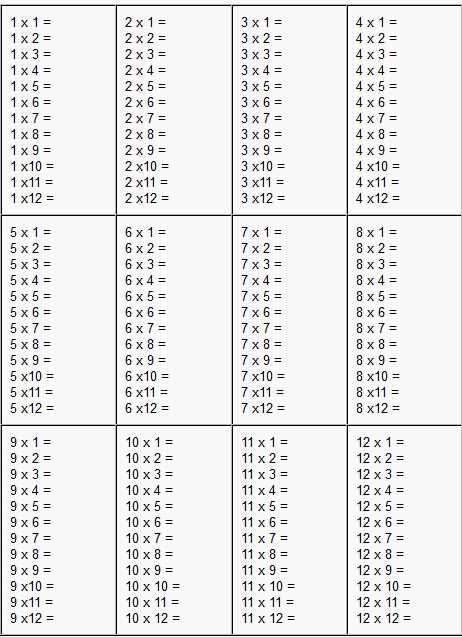
While you can learn these combinations by heart, utilizing printable resources can be a helpful way to keep practicing. Print out charts or worksheets for repeated practice to speed up the learning process. These can be hung on walls or kept as reference material during study sessions.
Repetition is the key. By regularly testing yourself with combinations of numbers between 1 and 12, you will reinforce your mental math skills and improve your speed. Understanding these combinations will allow you to perform larger calculations more quickly and accurately.
Multiplication Charts 1 to 12
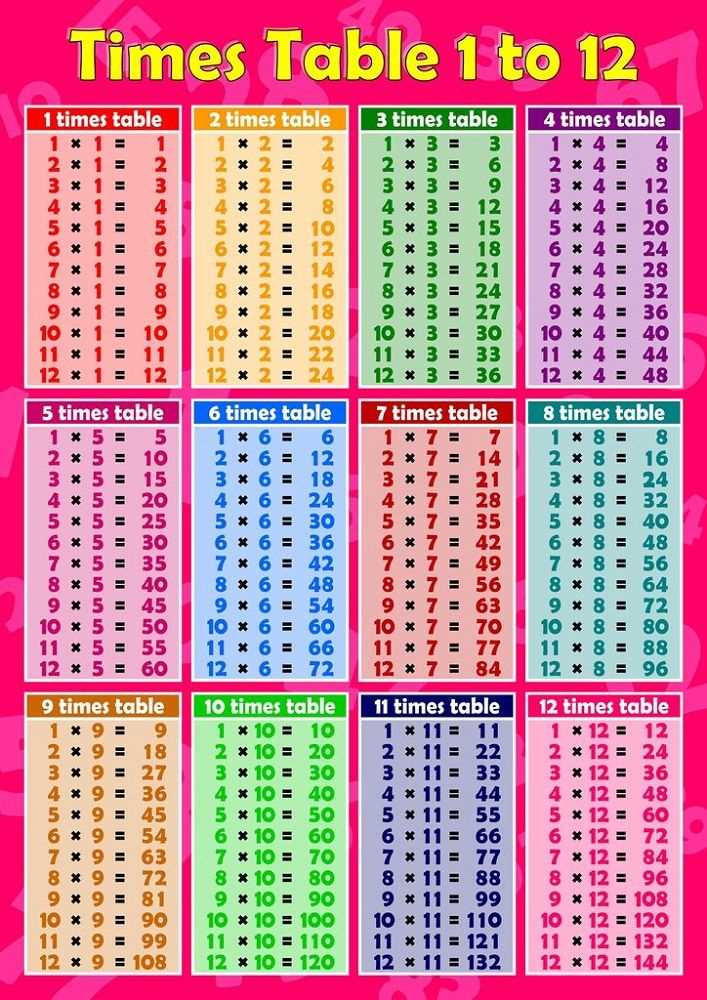
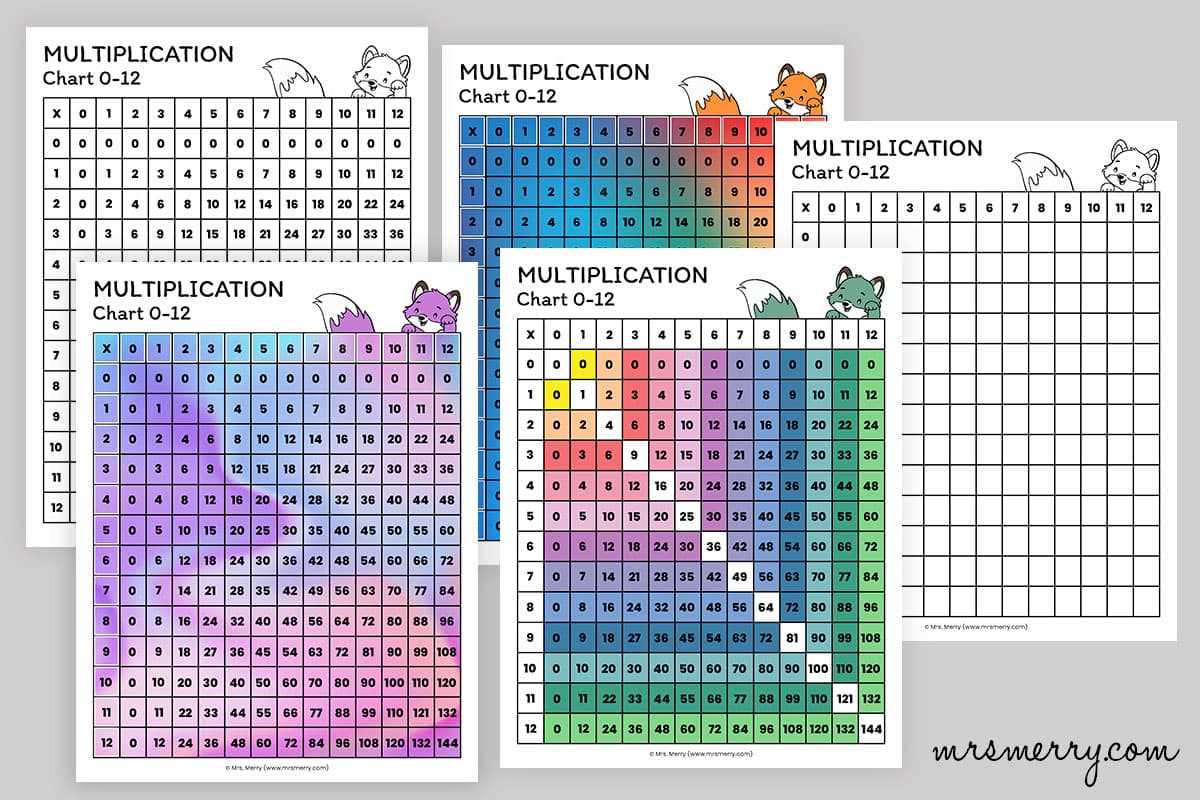
Having a visual reference for numbers 1 to 12 can significantly boost your ability to quickly solve basic math problems. These visual aids allow for faster recall and improved comprehension of number relationships. Using clear grids with rows and columns for each number helps students understand the structure and consistency of the calculations.
For students, printing charts with rows labeled 1-12 and corresponding results is a simple way to enhance learning. It’s not only about memorizing the facts but also about recognizing patterns. For instance, the results of each number repeat in predictable ways, making them easier to recall with practice.
The most effective grids are often divided into smaller sections that highlight key numbers, making it easier to break down complex problems. For example, focus on numbers that students typically find more challenging and isolate them on a dedicated section of the chart.
It’s beneficial to place these grids in visible spots around the study area. Repetition is key when working with numbers, so having them close by for quick reference encourages practice and improves retention over time.
Teachers and parents can also make use of these resources during lessons or home study. Having a chart readily available allows for quick reference while solving problems. It’s ideal for reinforcing new concepts during short sessions, where learners can easily find the answer without delay.
Some people prefer customizing these grids by adding color-coded sections, which can highlight even or odd results or identify multiples of particular numbers. This approach makes it easier for visual learners to follow along and notice patterns within the set of results.
Creating your own charts can be as simple as using a spreadsheet. Inserting rows for each number and then filling in the products is straightforward and provides flexibility for customization. It can also be a helpful exercise for reinforcing understanding of the subject.
Lastly, these references aren’t just for beginners. They serve as an excellent tool for revision at any age. Whether you’re reviewing basic concepts or diving into more advanced applications, having these charts available ensures that you can always work efficiently and with confidence.