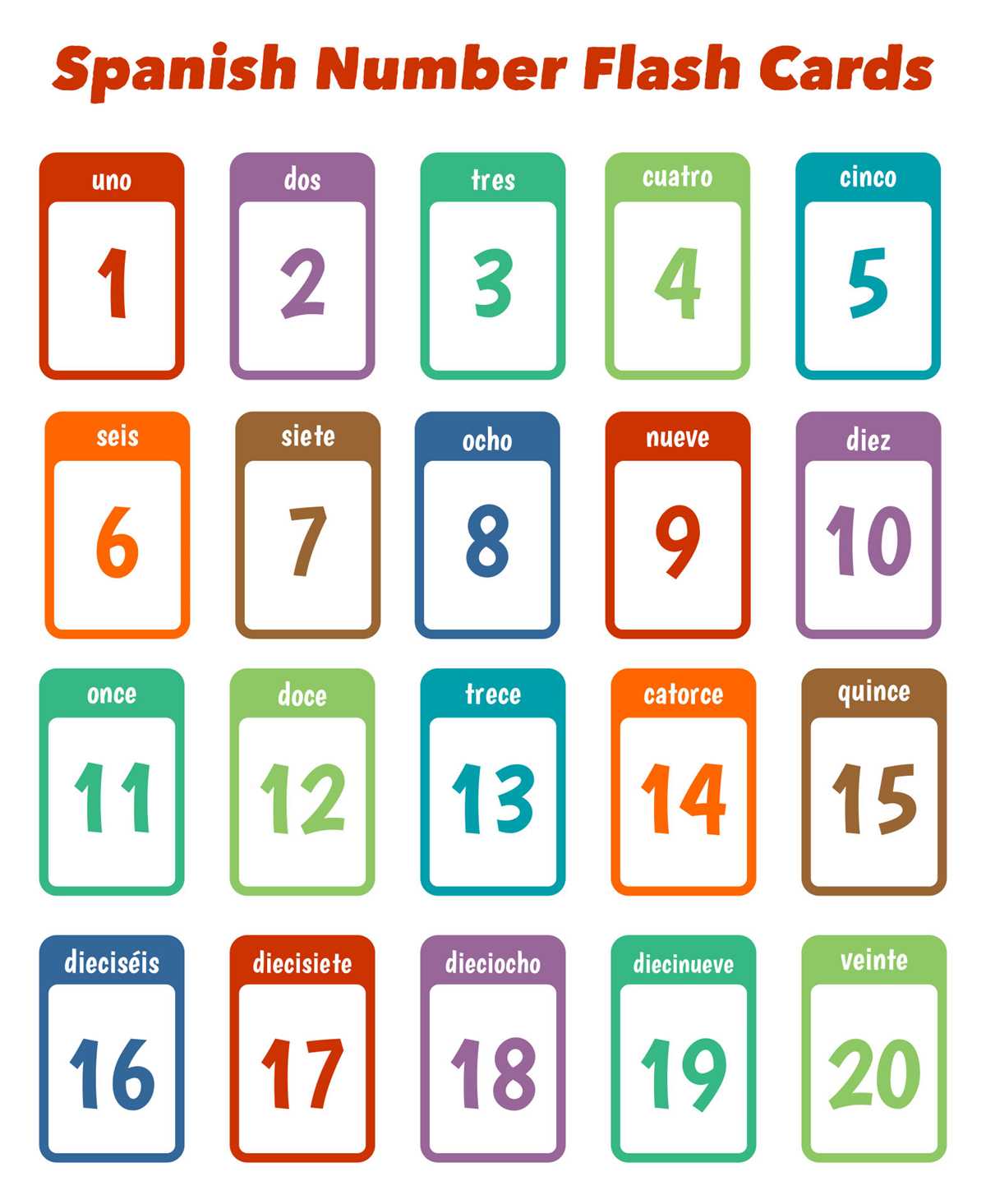
Start by memorizing the basic figures, as they form the foundation for all other quantities. The key to mastering this is frequent practice and repetition. Begin with the single digits and work your way up systematically.
Understanding the Basics from 1 to 10
The initial set of digits is crucial for building your understanding. Here are the first ten:
- 1 – Uno
- 2 – Dos
- 3 – Tres
- 4 – Cuatro
- 5 – Cinco
- 6 – Seis
- 7 – Siete
- 8 – Ocho
- 9 – Nueve
- 10 – Diez
Once these numbers are familiar, you can move on to higher quantities. Pay attention to patterns and how the tens evolve, making the process smoother.
Building Up to Larger Numbers
After mastering the first ten, you can easily learn subsequent quantities by understanding their structure. Numbers from 11 to 20 form a distinct pattern:
- 11 – Once
- 12 – Doce
- 13 – Trece
- 14 – Catorce
- 15 – Quince
- 16 – Dieciséis
- 17 – Diecisiete
- 18 – Dieciocho
- 19 – Diecinueve
- 20 – Veinte
From 21 onward, the numbers follow a more predictable structure: combining the word for “twenty” (veinte) with the units. For example, 21 is “veintiuno,” 22 is “veintidós,” and so on.
Making Large Numbers Easier
When you reach larger quantities, like 30 or 100, you’ll notice that the structure of the language remains consistent. Thirty is “treinta,” and forty is “cuarenta.” Larger multiples like fifty (“cincuenta”) and sixty (“sesenta”) follow this same logic, allowing you to build numbers from 10 to 100 easily.
Finally, practice is key. Use flashcards, quizzes, and other tools to reinforce the words and their proper spelling. Challenge yourself to count in Spanish every day to become more comfortable.
Effective Ways to Practice Counting in a New Language
To learn how to identify figures in another language, begin with the basics: learn how to pronounce the simplest symbols first. Start with the digits from one to ten. Practice both the spelling and the spoken forms until they are memorized. This will lay the foundation for more complex numbers later on. For example, the number one in Spanish is “uno,” and the number ten is “diez.”
As you move forward, focus on compound numbers. For instance, once you’re familiar with the tens, like twenty (“veinte”) or thirty (“treinta”), learn how these combine with smaller values to form larger quantities. Numbers from twenty-one (“veintiuno”) to twenty-nine (“veintinueve”) follow a clear pattern. This structure applies to larger multiples as well, such as sixty (“sesenta”) and seventy (“setenta”). Understanding these patterns will speed up your learning process.
For continuous practice, use visual aids like charts or flashcards. Print out these materials to make memorization more tangible. Each time you look at the chart, say the value out loud. Repetition is key to reinforcing memory. If possible, write out the numbers by hand to better internalize their forms. Test yourself regularly to ensure you’re retaining the information, which will improve your recall during real-life conversations.