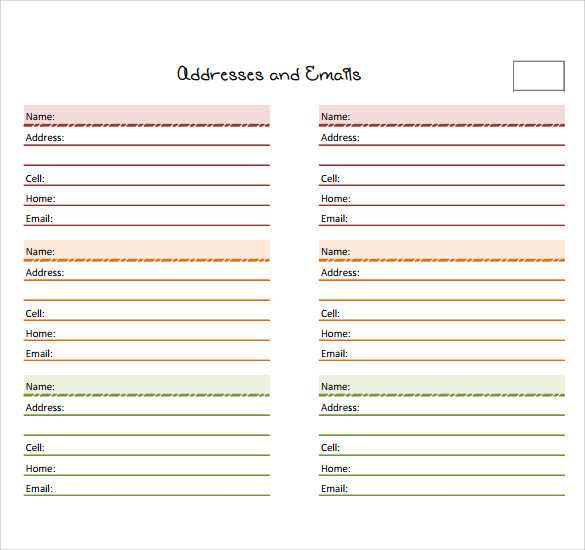
Start by downloading a simple directory format that allows you to list all of your contacts in a clear and efficient manner. Select a template that suits your needs, whether it’s for personal or business use. The layout should include sections for names, phone numbers, email addresses, and any other relevant details that help you stay organized.
Once you’ve selected a template, personalize it by adding categories or sections for different types of contacts. For example, group family members, friends, colleagues, and business partners into separate categories for easier access. This helps you quickly locate a contact when needed, without wasting time scrolling through a long list.
If you want to make your directory even more useful, consider adding extra fields such as birthdays, home addresses, or social media profiles. This additional information can make your directory a comprehensive resource for managing both personal and professional relationships.
How to Customize Your Contact List for Maximum Efficiency
Customizing your directory for maximum use is straightforward. Start by choosing a format that suits your workflow, whether it’s a spreadsheet, a downloadable PDF, or a printed version. If you’re using a digital format, make sure it’s compatible with the devices you use most, such as your computer, phone, or tablet.
For those using printed copies, make sure the font size is large enough to read easily, and the columns are wide enough to accommodate longer entries. This can prevent you from having to squint or make adjustments as you add new entries. You can also laminate your pages or place them in a binder for protection and durability.
Best Templates for Easy Contact Organization
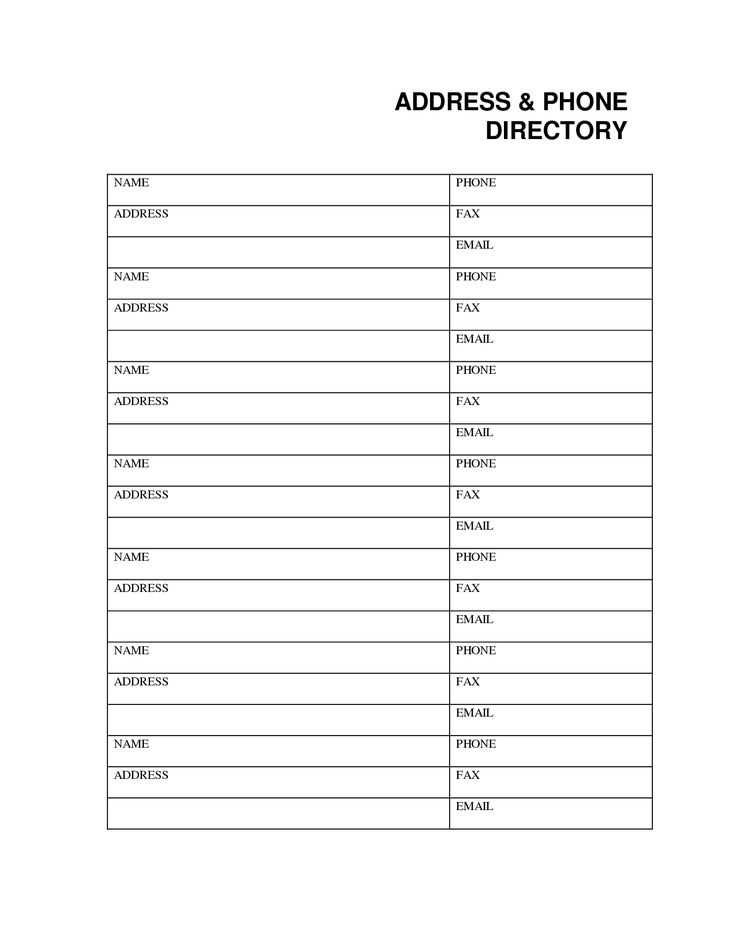
There are many free templates available online that you can download and print. Look for ones that offer flexibility, like ones that allow you to add more fields as your list grows. Printable formats such as spreadsheets or simple blank columns work well, as they allow for easy customization.
Additionally, you can find templates designed with specific needs in mind, such as templates for businesses or templates for families. Business-oriented templates typically include space for company names, job titles, and other professional details, while family-oriented templates focus more on personal information like birthdays and anniversaries.
Once you’ve chosen your template, ensure it’s up to date and organized regularly. A well-maintained directory will save you time and frustration when you need to reach someone quickly.
How to Organize Your Contact List Effectively
To keep your contacts well-organized, start by using a format that allows you to include all relevant details such as names, phone numbers, addresses, and emails. Choose a structure that’s simple but provides enough space for these fields. If you’re printing it out, consider using a template with clear, spaced-out sections to avoid overcrowding the page.
For an even more streamlined setup, divide your list into categories. For instance, group family, friends, colleagues, and clients separately. This will help you locate the right contact faster when you need it. You can also add extra sections for birthdays, social media profiles, or important notes like anniversaries or special occasions.
When deciding on the format, consider how frequently you will update your list. If your contact base is small and not changing often, a simple printed page might suffice. However, if you have many entries or need easy edits, a digital version with customizable fields might be more practical, even if it’s printed occasionally.
Lastly, keep your contact list easily accessible. Whether you’re using a binder, folder, or digital file, choose a method that fits your lifestyle. For printed versions, laminating the sheets or putting them in plastic sleeves can protect them and keep the list looking neat for longer. For digital versions, store them in cloud services or apps for safe and quick access.