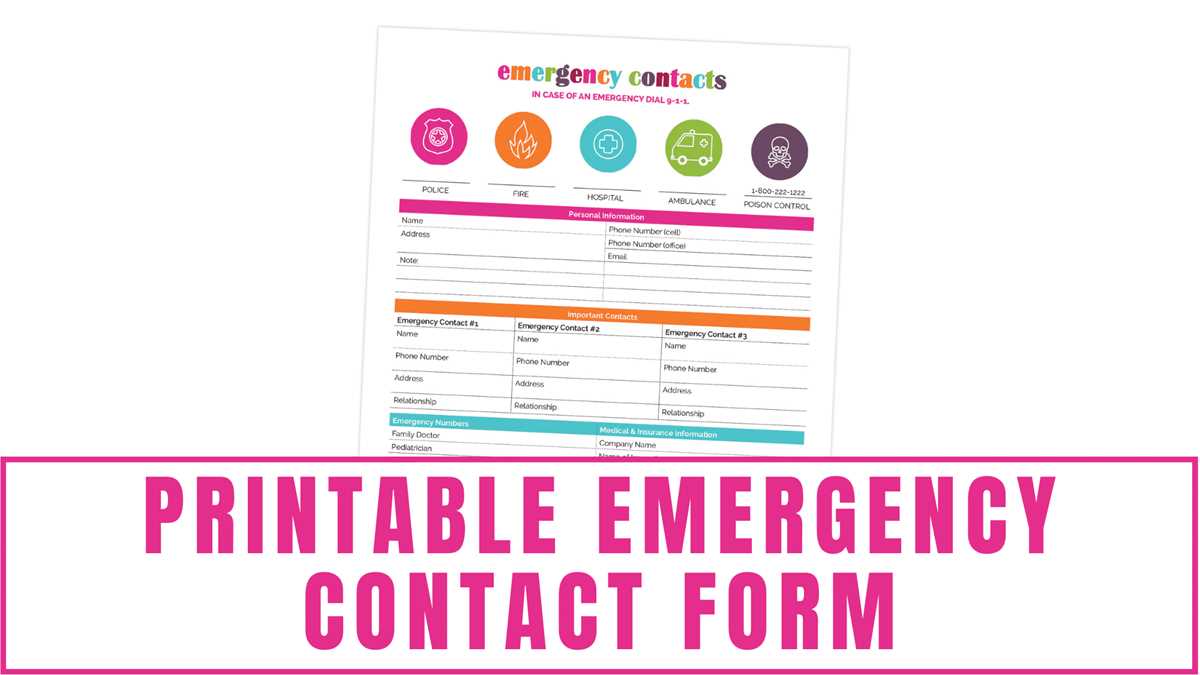
Having a clearly organized document with key phone numbers and addresses is crucial in case of unexpected situations. Creating an easy-to-use sheet with your important contacts is one of the first steps to being prepared. Whether it’s for your family, workplace, or a personal event, this sheet should always be readily available and filled with the necessary information.
Start by including basic details such as names, relationships, and phone numbers for people who can be reached in case of urgent matters. It’s important to also note the addresses of these contacts, as well as their availability times. For medical emergencies, you should list health-related details, such as known allergies, current medications, and insurance numbers.
Make sure the design is clean and straightforward. The document should be easy to read under pressure, so a simple structure is ideal. Once the details are added, keep the sheet somewhere it can be quickly accessed by you or someone else in case of need. It’s also a good idea to update this list regularly, especially when phone numbers or contact details change.
Printable Simple Emergency Contact Form
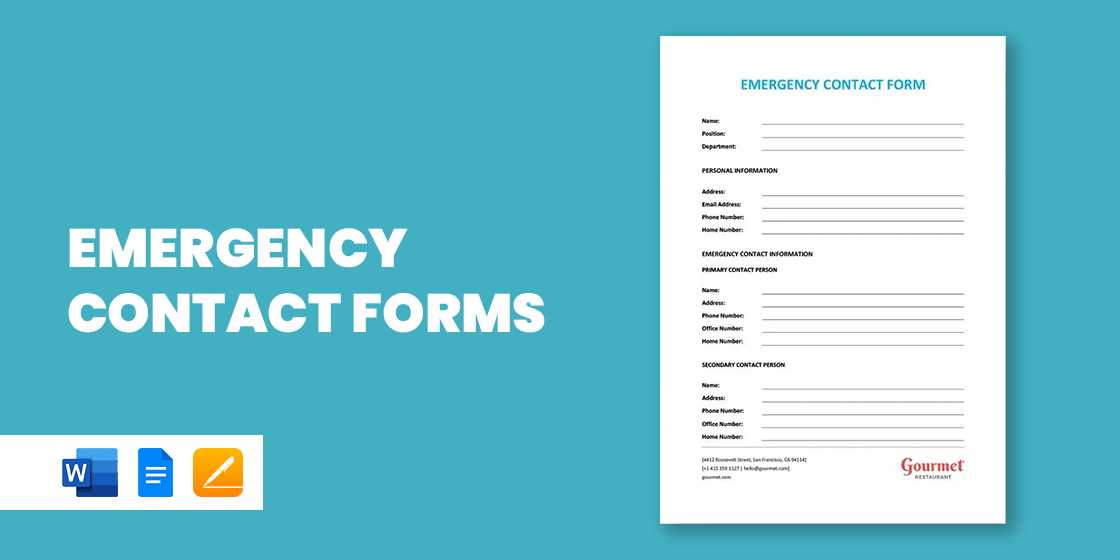
To create an effective sheet for urgent situations, make sure to list vital information clearly. This should include the names, relationships, phone numbers, and addresses of people who can assist in critical moments. In addition, include their availability hours and any relevant medical details, like allergies or ongoing treatments. Having everything organized will make it easier to act quickly if needed.
Design the sheet with simplicity in mind. Use bold headings for each section and ensure there’s enough space for additional details if necessary. Keep a few copies in easily accessible locations, like your wallet, car, or in your home office. Regularly update this document to reflect any changes, and ensure trusted family members or colleagues have access to it in case of unforeseen events.
How to Create an Emergency Contact Form for Immediate Use
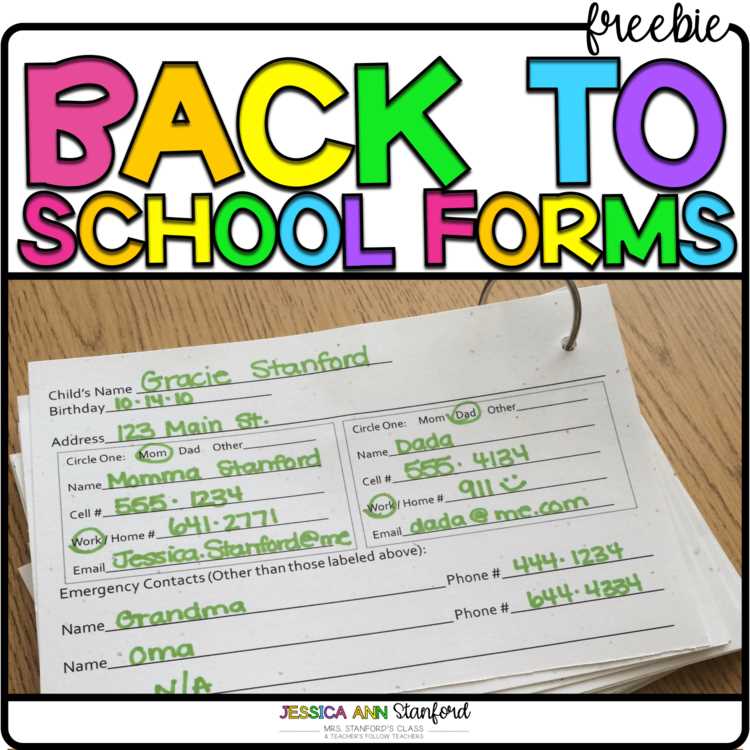
Begin by listing the most important individuals who can provide help in urgent situations. Ensure to include their full names, relationship to you, and multiple phone numbers, such as home, work, and mobile. If possible, include their email addresses for faster communication if phone contact is not available.
Next, include additional details like preferred languages, medical conditions, or special instructions that may be crucial in case of an urgent situation. This information will assist caregivers or emergency responders in providing the most appropriate help. You should also note any known allergies, medical treatments, or relevant health concerns that may require immediate attention.
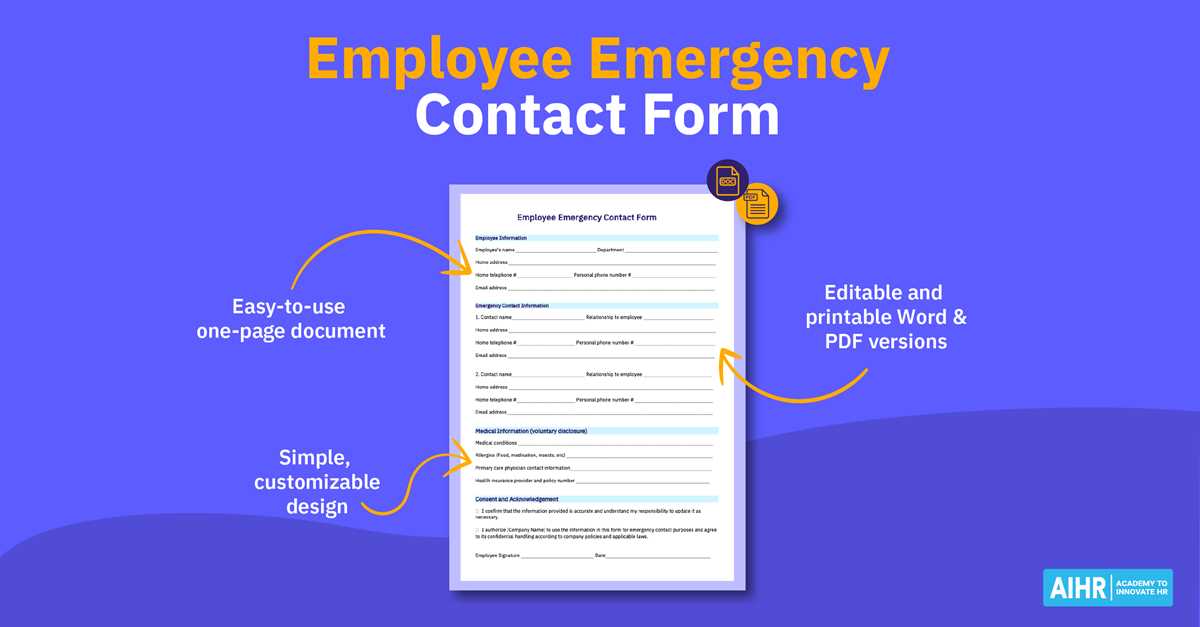
Design the document to be clear and easy to read. Use large, bold headings to categorize the information. Each section should have adequate space to accommodate more than one contact per category (e.g., primary contact, secondary contact). Make sure the layout is user-friendly and accessible for quick reference in stressful situations.
Once created, print multiple copies and store them in easily accessible places such as your car, home office, or with trusted friends or family. It’s also wise to share the document digitally with a few key people for faster access during any unforeseen incidents. Regularly update the details, especially if there are any changes to your health status or the people you trust for assistance.