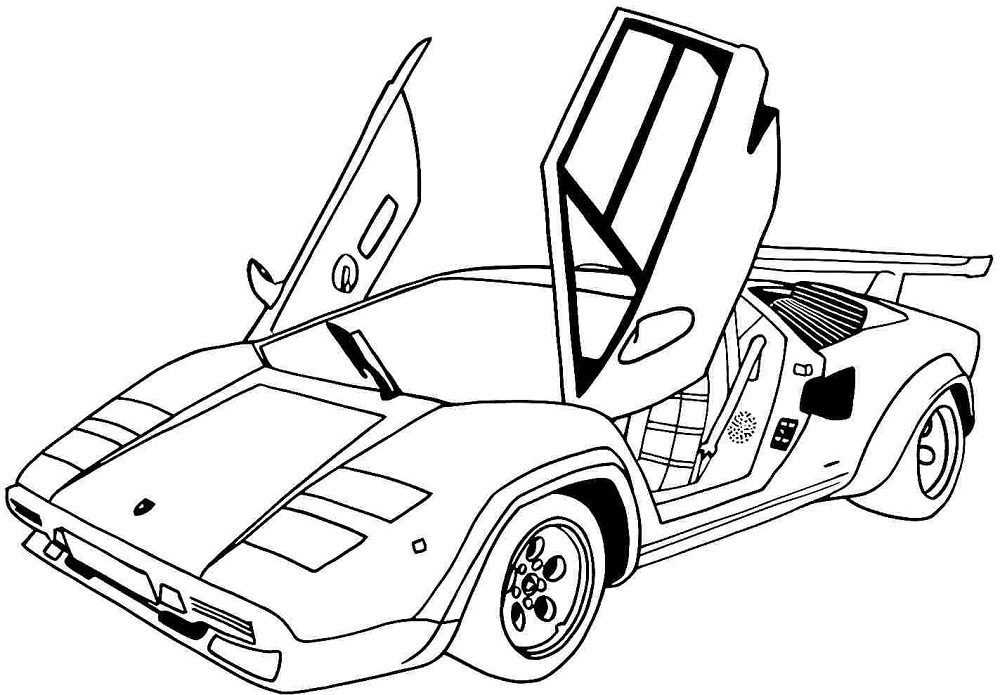
Download high-resolution race vehicle outline sheets in PDF format at 300 DPI and print them on A4 or US Letter paper using standard inkjet settings for sharp lines and clean details.
Choosing the Right Vehicle Illustrations
Select drawings based on age and skill level. For younger children, use simple side-view race auto sketches with bold 2–3 mm outlines and minimal background elements. For older kids and teens, choose detailed supercar renderings with visible spoilers, air intakes, rims, and interior features.
- Simple track racers: large body panels, wide wheels, clear windows
- Modern supercars: aerodynamic shapes, low-profile tires, rear diffusers
- Classic performance models: long hoods, round headlights, chrome bumpers
- Drift machines: angled stance, smoke effects, racing decals
Use grayscale preview images to check line clarity before printing. Avoid low-resolution JPG files under 150 DPI, as they produce blurry edges.
Printing Settings and Paper Recommendations
Set your printer to “Best” or “High Quality” mode and disable scaling to maintain original proportions. Use 90–120 gsm paper for markers and 160–200 gsm cardstock for paint or heavy shading.
- Open the PDF file in a viewer that supports full-size printing.
- Select “Actual Size” or 100% scale.
- Choose black-and-white mode to preserve deep outlines.
- Allow the ink to dry for at least 2 minutes before applying markers.
For colored pencils, smooth paper with a light coating allows better blending. For alcohol markers, thicker sheets prevent bleed-through. Place a spare sheet underneath to protect the table surface.
Creative Ideas for Custom Designs
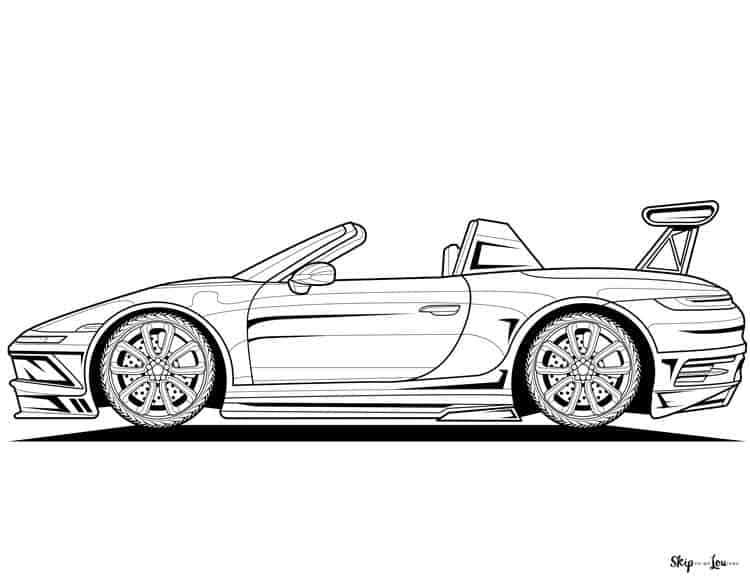
Add racing numbers, sponsor-style logos, and custom stripes using fine-tip pens. Metallic gel pens work well for wheel rims and headlights. Create gradient effects on body panels by layering similar shades from dark to light.
Using Vehicle Art in Educational Activities
Integrate these race auto templates into lessons about aerodynamics, wheel design, and geometry. Ask children to label spoilers, tires, and air vents, then compare how design differences influence speed and stability.
Organizing a Themed Activity Session
Prepare sets featuring different performance models and hold a timed art session of 30–45 minutes. Display finished works on a board sorted by category such as track racer, street machine, or vintage coupe.
Printable Sports Car Coloring Pages
Download high-resolution race vehicle outline sheets in PDF at 300 DPI and print them at 100% scale to keep proportions accurate and lines sharp. Choose files sized for A4 or US Letter to avoid automatic resizing that distorts wheel arches and body curves.
Pick illustration complexity based on age: bold 2–3 mm contour drawings with minimal background suit preschoolers, while detailed superauto sketches with spoilers, vents, brake discs, and interior dashboards fit older children. Check that line art is pure black (#000000) to prevent gray, faded outlines after printing.
Use 100–120 gsm paper for pencils and wax crayons; switch to 180–220 gsm cardstock for alcohol markers or light watercolor washes. Activate “High Quality” mode in printer settings and disable toner-saving options. Let each sheet dry flat for at least two minutes before applying ink-heavy tools.
Encourage realistic paint schemes by referencing real racing liveries: dual stripes across the hood, contrasting side skirts, and colored brake calipers. Metallic gel pens add shine to rims and headlights, while white pencil highlights create reflections along curved body panels.
For group activities, prepare sets featuring track racers, modern superautos, and vintage performance machines. Allocate 30–40 minutes per session and provide fine-tip liners (0.3–0.5 mm) for adding numbers, sponsor-style decals, and custom grille patterns.
Store finished vehicle artwork in clear A4 folders or bind them into a themed booklet. Label each sheet with model name, year, and top speed to combine creative work with basic technical facts.