Instructions for Using a Set of Symbolic Objects for Easter Reflection
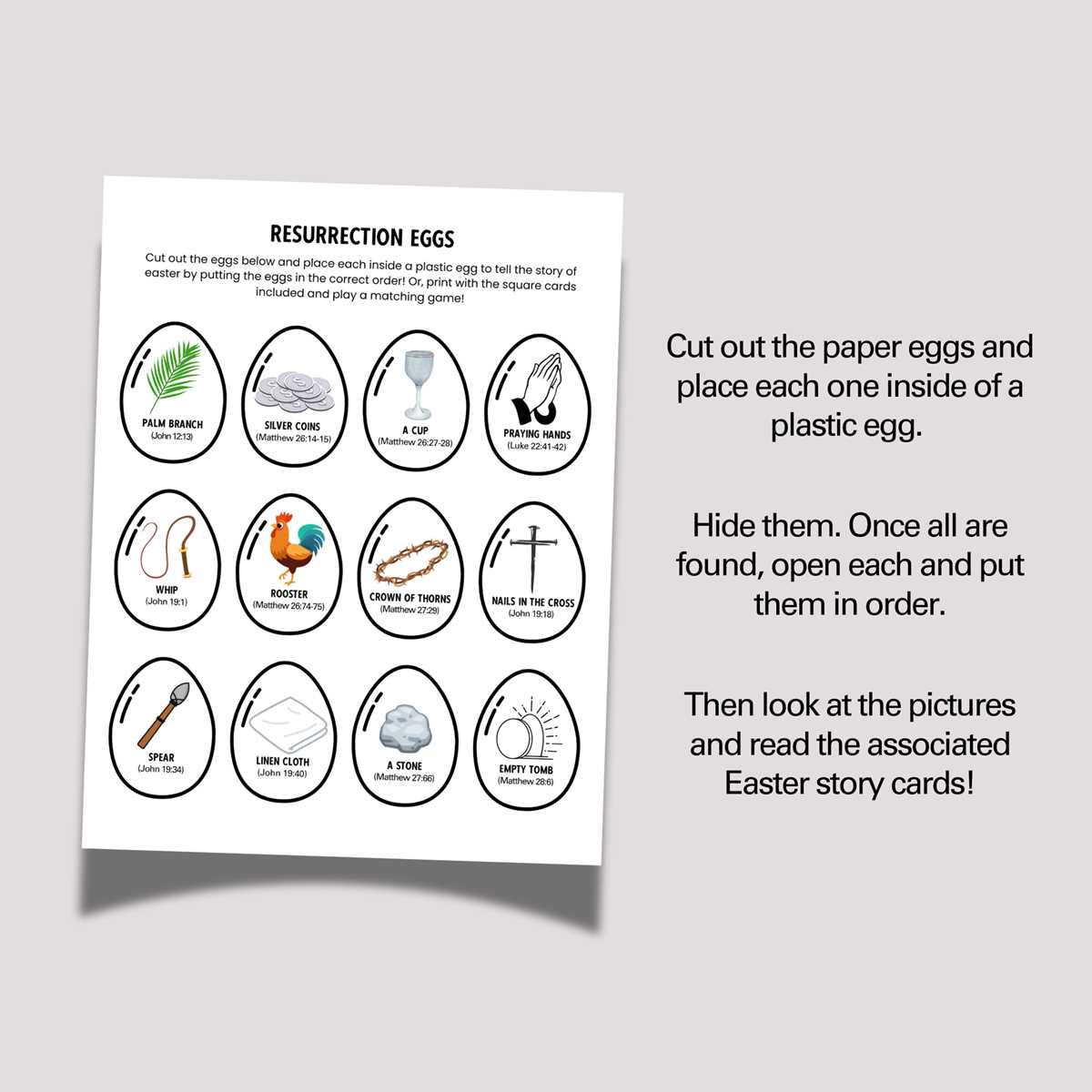
To create a meaningful and engaging learning experience for children or groups during Easter, consider incorporating a set of twelve items that represent key moments of the Easter narrative. These objects serve as physical reminders, allowing for hands-on interaction and a deeper connection to the events leading up to the resurrection. Below is a guide on how to use these items to facilitate reflection and discussion.
List of Symbolic Objects and Their Meanings
- Piece of Cloth – This symbolizes the robe worn by Jesus during His trial. Use this item to discuss the moment when Jesus was mocked and dressed in a purple robe by Roman soldiers.
- Silver Coins – Represent Judas’ betrayal. Talk about the 30 pieces of silver Judas received in exchange for handing over Jesus.
- Cup – Symbolizes the Last Supper and the covenant between Jesus and His disciples. Discuss the significance of the cup in the context of Christ’s sacrifice.
- Whip – This item reflects the scourging Jesus endured before His crucifixion. Use it to explain the suffering He faced at the hands of Roman soldiers.
- Crown of Thorns – Represents the crown placed on Jesus’ head as a mockery of His kingship. Explain the pain and humiliation He experienced.
- Wooden Cross – A powerful symbol of Jesus’ sacrifice on Calvary. Use it to discuss His crucifixion and the redemption it brought to humanity.
- Nail – Represents the nails used in the crucifixion. This item offers a tangible reminder of the pain Jesus endured for the salvation of mankind.
- Dice – Symbolizes the soldiers casting lots for Jesus’ garments. Discuss how even in His final moments, people showed indifference to His suffering.
- Spice Jar – Represents the ointments used to prepare Jesus’ body for burial. Use this to explain the burial process and the mourning of His followers.
- Stone – Represents the stone that sealed the tomb where Jesus was laid. This symbolizes the finality of death, and how it seemed like the end of hope.
- Empty Tomb – Symbolizes the resurrection. After the tomb was opened, it was found empty, signaling that Jesus had risen.
- White Cloth – Represents the resurrection and the purity of new life. Use this to conclude the story, symbolizing the hope and new beginnings brought by the resurrection.
How to Use the Items for Teaching
- Prepare a Display: Arrange the symbolic items in a box or on a table, each labeled with a brief description of its significance in the Easter story.
- Interactive Reflection: As each item is introduced, invite participants to reflect on the corresponding event and how it fits into the overall narrative of Jesus’ life, death, and resurrection.
- Discussion Prompts: After each item is discussed, ask open-ended questions to encourage deeper thought. For example: “Why do you think Judas chose to betray Jesus?” or “What does the resurrection mean for us today?”
- Creative Learning: For younger participants, create a simple craft or activity related to each item. This could include coloring sheets, puzzles, or role-playing the events.
- Personal Reflection: End the session by encouraging participants to write or share their thoughts on what the resurrection means in their own lives.
Final Thoughts
Using symbolic items to teach the Easter narrative helps bring the story to life in a tangible way. By providing visual and physical reminders of key moments, participants can gain a deeper understanding of the sacrifice and triumph that defines the season. This approach encourages reflection, enhances learning, and fosters a personal connection to the meaning behind the Easter celebration.
Resurrection Eggs Story Printable: A Detailed Guide
When preparing a meaningful activity to teach children about the significant events of the Passion Week, consider using visual aids that tie each moment to a physical object. You can create a hands-on experience by pairing symbolic items with key moments from the last days of Jesus’ life, leading to His resurrection. This method not only helps children engage with the story but also makes the lesson more memorable and impactful.
Choose a collection of small objects that represent specific moments. For example, a small nail can symbolize the crucifixion, a piece of cloth can stand for the burial, and a stone can represent the sealed tomb. Each item should correspond to a specific part of the narrative, helping children connect the physical with the spiritual as they move through the timeline of events.
For each object, provide a brief explanation that corresponds to its symbolic meaning. This step allows children to understand the depth behind each item. As you explain each one, give them an opportunity to hold it and reflect on its significance. This approach reinforces the connection between the physical and the spiritual journey that Jesus underwent.
When creating your printable materials, ensure they are easy to follow and visually appealing. Provide clear, concise instructions for each step, along with a description of the object’s relevance to the narrative. This helps both parents and educators engage with the activity effectively, ensuring the experience is both educational and enjoyable for children.
Include visual prompts for each moment in the sequence. These could be simple images or illustrations that depict key events such as the Last Supper, the trial before Pilate, and the crucifixion. Including these visuals helps children not only hear about the events but also see them in a way that deepens their understanding.
To make the lesson more interactive, consider incorporating a short discussion or questions after each item is revealed. For example, after showing the piece of cloth that symbolizes the burial, you might ask, “Why do you think Jesus was wrapped in cloth, and what does that tell us about His death?” These moments encourage critical thinking and help children process the deeper meaning of each event.
As you guide children through the activity, encourage them to share their thoughts and reflections. This not only makes the activity more engaging but also helps children internalize the lessons of the Passion Week. It transforms the lesson into a personal reflection on Jesus’ sacrifice and resurrection.
At the conclusion of the activity, gather the children together to talk about the resurrection. After walking through the somber events of Jesus’ death, the empty tomb offers hope and joy. Highlight how the resurrection changes everything, offering the promise of new life. End the lesson with a prayer or song, reinforcing the message of hope and victory over death.