
Design and Personalize Your Stickers
Start by selecting a template that matches the size of your materials. Most software like Microsoft Word or Google Docs offers templates where you can easily adjust the dimensions for tags. You can also use websites like Canva, which allow you to design without much hassle. Add information such as experiment title, your name, and the date to ensure clear identification.
Choosing readable fonts and incorporating simple visuals, such as icons or logos, can make your labels more engaging. Make sure there’s enough space around text so it doesn’t look crowded. Consider using bold for headings or key details like the title of your work or experiment type.
Printing and Applying the Stickers
Before printing, check the printer settings to match the size of the sticker sheet. Using the right paper is crucial–opt for a heavier weight like 180gsm or higher to prevent wrinkling. For durability, go with waterproof or tear-resistant materials, especially for projects that might be handled frequently.
After printing, use scissors or a paper cutter to cut the shapes accurately. If you want a more professional finish, use a corner punch to round the edges. Apply them to your equipment, display board, or data sheets carefully, ensuring that the surface is clean and dry for the best adhesion.
Choosing the Right Size for Stickers
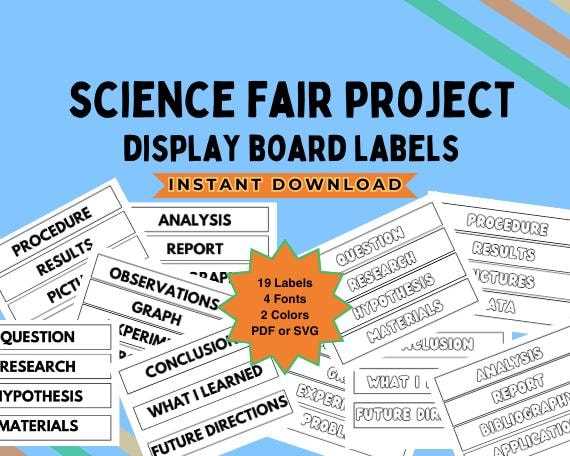
Measure your containers or materials before deciding on the size of the tags. If you’re labeling small test tubes or jars, stick to smaller dimensions–around 2×3 inches works well. For larger boards or displays, use wider tags, approximately 4×6 inches, to make sure the text stands out and is easy to read from a distance.
If you’re using adhesive sheets, ensure that each label fits within the printable area. Most printer sheets come in standard sizes like 8.5×11 inches, so you may need to adjust your design accordingly. Avoid using too many details in a small space to maintain legibility.
To save time, consider using pre-cut sticker sheets that are designed to fit standard printers. These often come in various sizes, giving you flexibility for different materials. Test the fit by printing a blank sheet first before adding any content to avoid wasting paper and ink.