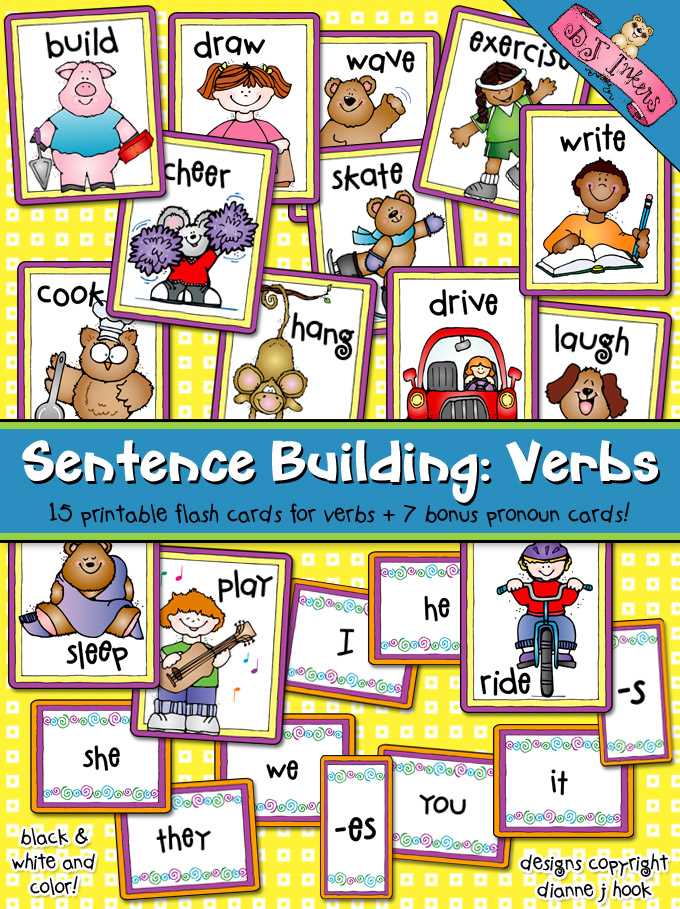
Download PDF grammar sheets with movable word cards and short phrase strips sized for US Letter or A4, then print on 160–200 gsm paper for repeated classroom use. Select black and white layouts with clear spacing between words to support emerging readers.
How to Teach Word Structure with Cut and Paste Grammar Sheets
Provide learners with mixed word tiles and ask them to arrange subject, verb, and object in correct order. Use color coding to highlight parts of speech:
- Nouns in blue
- Verbs in red
- Adjectives in green
- Articles in yellow
Begin with three word phrases such as “The dog runs” before adding descriptors or prepositional phrases. Keep tasks short, 10–15 minutes per session, to maintain focus.
Progression Plan by Grade Level
- Kindergarten: simple subject and action combinations
- Grade 1: add describing words and punctuation practice
- Grade 2: introduce conjunctions and compound ideas
Printing and Organizing Grammar Templates for Daily Practice
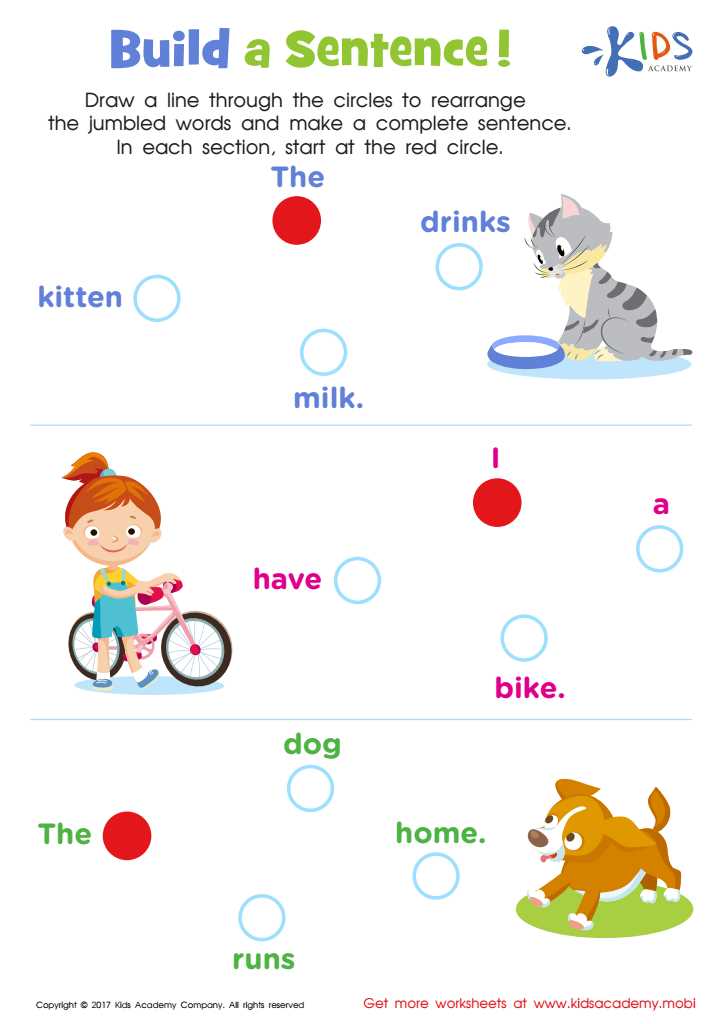
Set printer scaling to 100 percent and avoid auto fit to preserve spacing between words. Laminate master copies or store them in plastic sleeves to reuse with dry erase markers. Keep cut word strips in labeled envelopes sorted by theme such as animals, school, or weather to simplify lesson preparation.
Classroom Management Tips
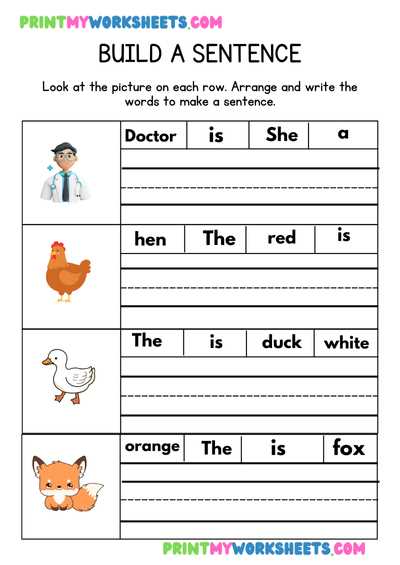
Prepare individual sets clipped together for each student to reduce distribution time. Rotate themes weekly to reinforce vocabulary while practicing structure. Track progress by saving completed worksheets in student folders for assessment reviews.
Sentence Building Printables

Use cut-and-arrange grammar worksheets with movable word tiles to train learners in correct word order from the first lesson. Print sets on 160–200 gsm paper, trim cards to equal size, and store each activity in labeled envelopes by topic.
Focus each task on one structure pattern at a time, such as subject + verb or subject + verb + object. Provide 6–8 word cards per exercise to limit overload and require learners to construct at least three different complete statements from the same set.
Apply color coding to clarify grammar roles. Mark nouns in blue, action words in red, modifiers in green, and function words in yellow. This visual separation reduces confusion and speeds recognition of patterns during guided practice.
Increase complexity gradually by adding adjectives, adverbs, or prepositional phrases. For example, after mastering “The cat sleeps,” expand to “The small cat sleeps on the sofa.” Keep each worksheet limited to one grammar focus, avoiding mixed targets on the same page.
Integrate punctuation tasks directly into the exercises. Leave blank spaces for capital letters and ending marks so learners must complete them before reading the final statement aloud.
Schedule short daily drills of 10–15 minutes and rotate themes weekly–animals, school routines, weather–to strengthen vocabulary alongside syntax skills. Archive finished sheets in student folders to monitor accuracy and track recurring mistakes.
Prepare differentiated sets by adjusting word quantity and structure length. Beginners work with three or four tiles, while advanced students receive conjunctions and transition words to connect two ideas into a longer written expression.