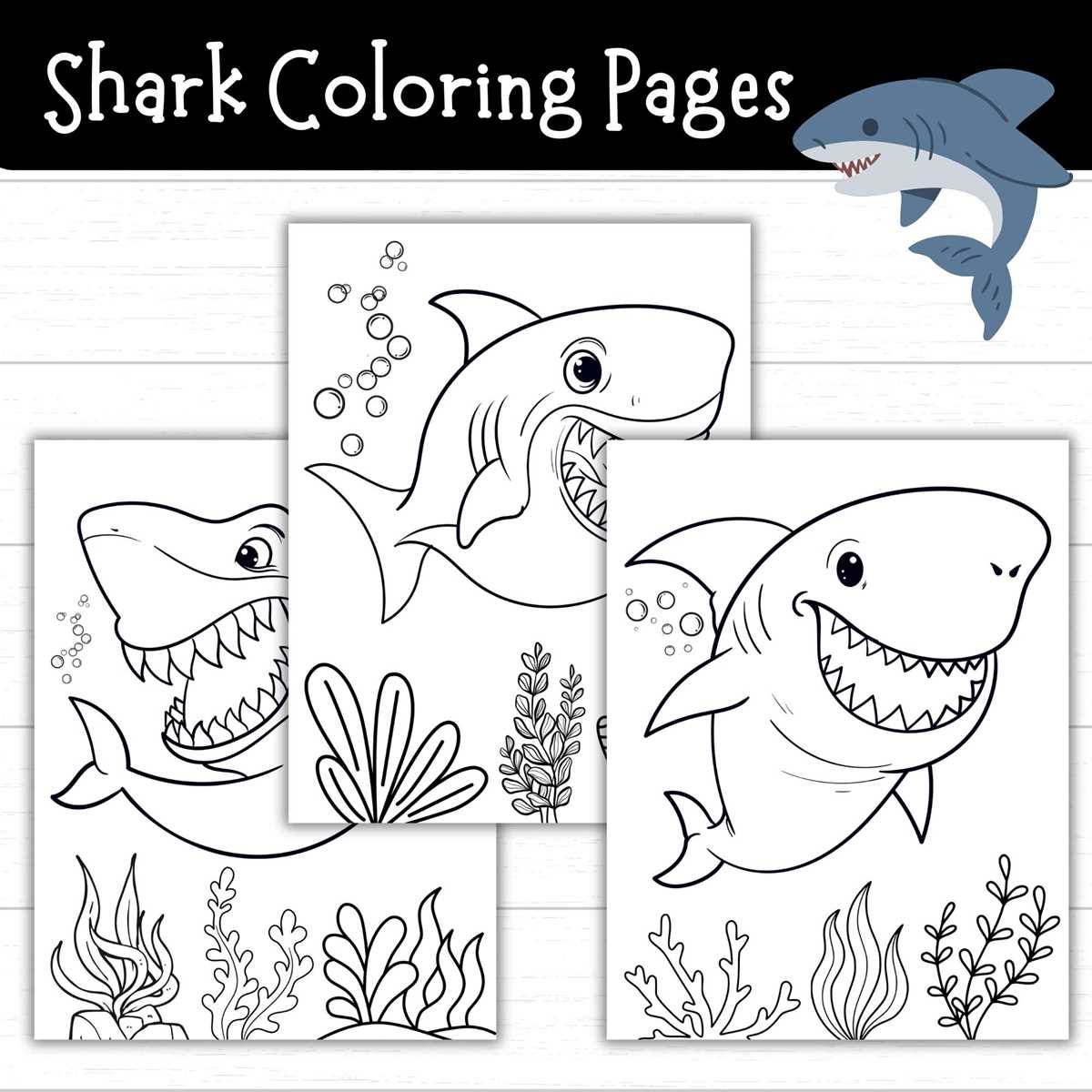
Choose ocean predator coloring pages with bold outlines and minimal background detail for the best results with children. Clean line art reduces confusion, speeds up coloring time, and keeps the focus on the animal’s shape.
For preschool and early elementary use, pick drawings where the body length fills at least 60–70% of the page width. Larger subjects help young hands stay within the lines and make crayons easier to control. Avoid highly detailed teeth or scale patterns for beginners.
Paper choice affects the final look. Standard 20 lb copy paper works for crayons and pencils, while 65 lb cardstock handles markers without bleed-through. If printing multiple pages for a classroom, set the printer to high-contrast grayscale to keep outlines crisp.
Prepare several difficulty levels in advance and sort them by age group. This keeps activity time organized and allows each child to work with artwork that matches their cutting and coloring skills.
Shark Printable Pictures for Kids Coloring Pages and Ocean Craft Activities
Use large ocean predator coloring pages with thick outlines for group activities where children work quickly and share supplies. Aim for artwork that fills most of the page and keep line weight around 2–3 pt so the edges remain clear after printing on standard home printers.
Match the artwork style to the activity goal:
- Simple cartoon fish for preschool coloring time
- Medium-detail sea hunter drawings for early elementary lessons
- Realistic marine predator outlines for older students
- Full-body ocean scenes for cut-and-paste crafts
Prepare extra copies and keep them sorted by difficulty level to prevent delays during classroom or home craft sessions.
How to Choose the Right Shark Image Style for Different Age Groups
Select simple cartoon-style ocean predator drawings for younger children to reduce frustration and keep attention on coloring rather than fine detail. For ages 3–5, choose artwork with thick borders and minimal texture so crayons can fill spaces quickly.
For early elementary students, move to medium-detail marine hunter illustrations that include fins, gill lines, and basic teeth shapes. Keep interior sections large enough–about 0.3–0.5 inches wide–so markers and colored pencils stay within the lines. Avoid dense scale patterns at this stage.
Older children and preteens handle realistic sea predator outlines with sharper features and more anatomical detail. At this level, thinner line weight (around 1.5–2 pt) works well and allows shading practice without the drawing looking crowded.
Test one sample with the target age group and time how long basic coloring takes. If most children finish in under five minutes, the artwork is too simple; if many abandon the page halfway, reduce detail or increase the main body size.