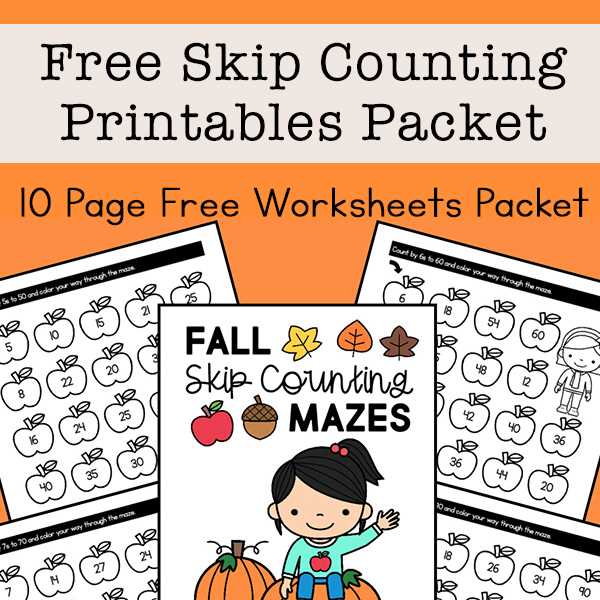
Use step-based number worksheets to train fast recognition of sequences such as 2, 4, 6 or 5, 10, 15 through short daily sessions of 10–15 minutes. This format helps children see numeric gaps clearly and strengthens multiplication readiness without long explanations.
Choose sheets that show numbers arranged in rows, number lines, or simple grids. A line from 0 to 100 with marked intervals improves visual tracking, while fill-in tables build prediction skills. For early grades, sequences up to 50 work better; older learners handle ranges up to 1,000.
Paper-based tasks allow repetition without screen fatigue and make error checking easy. Mark completed rows with a pencil and revisit missed patterns the next day. This repetition cycle improves speed and accuracy during basic arithmetic drills.
For best results, mix step sizes within one session, such as intervals of 2, 5, and 10. This trains flexibility rather than memorization and prepares students for mental math exercises used in class assessments.
How to Use Skip Counting Worksheets for Daily Math Practice at Home and School
Assign step-based number sheets for a fixed 10-minute block each day, focusing on one interval such as twos or fives to build speed and pattern recognition without overload.
At home, place the pages in a binder and reuse them with a dry-erase sleeve so children can repeat sequences multiple times. This setup supports immediate correction and keeps practice consistent across the week.
In classrooms, distribute identical sets to the whole group and read the sequence aloud while students track visually. Pair this with choral responses to reinforce rhythm and reduce hesitation.
Alternate formats across sessions: number lines on Monday, grids on Wednesday, and missing-number tables on Friday. This variation trains transfer of skills rather than memorization.
For learners who struggle, limit the range to 0–50 and highlight every interval with color. Gradually extend to 100 or 1,000 as accuracy improves, checking progress with timed drills.
Use completed sheets as quick assessments by recording completion time and error count. A target of fewer than two errors per page signals readiness to advance to larger steps.
Coordinate home and school practice by using the same interval sets each week, allowing adults to monitor improvement and address gaps before they affect multiplication tasks.