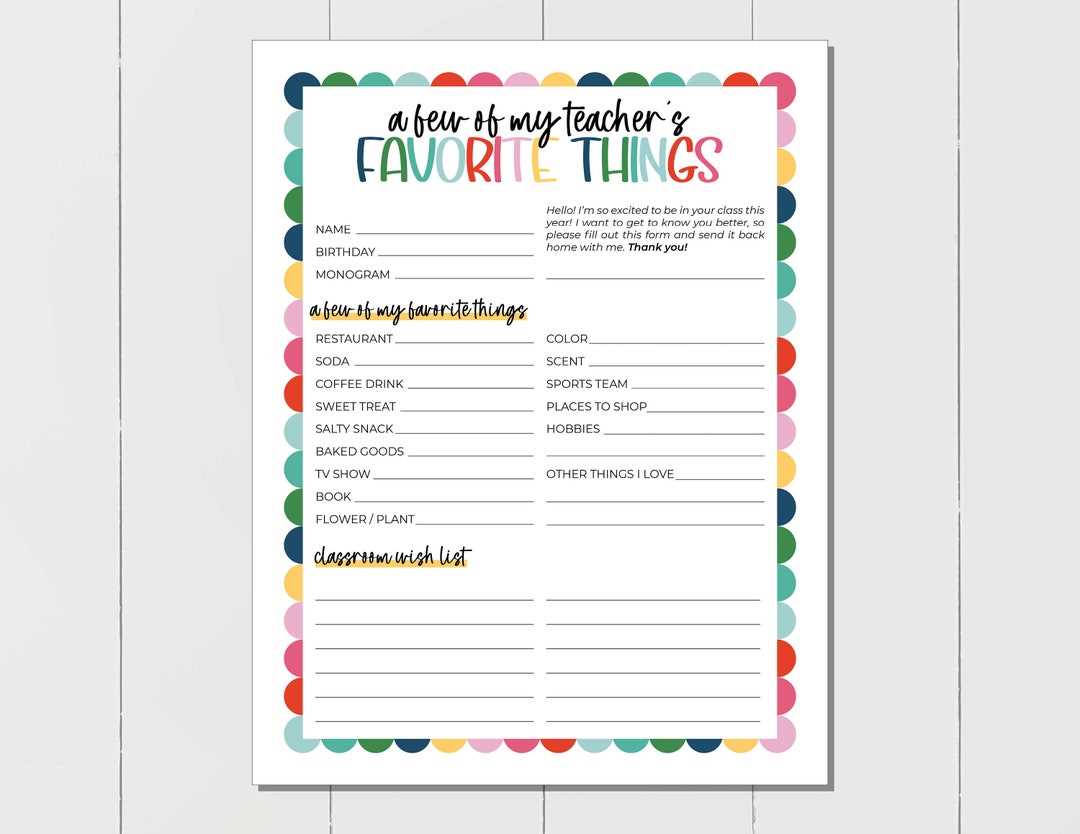
Send a one-page preference survey at the start of the school year to gather accurate gift ideas without guesswork. Include short-answer fields for snack choices, drink orders, classroom supply wishes, and hobby interests so families can select items that will actually be used.
Keep the layout clean with grouped sections and wide writing lines. Overcrowded questionnaires often lead to skipped answers, especially during busy back-to-school weeks. A single US Letter or A4 page with clear headings usually provides enough space.
Store completed sheets in a shared digital folder or labeled binder for room parents and event planners. Updating the questionnaire once per year helps track changing preferences and prevents duplicate gifts during holidays or appreciation events.
Teachers Favorite Things Form Printable for Easy Gift Planning
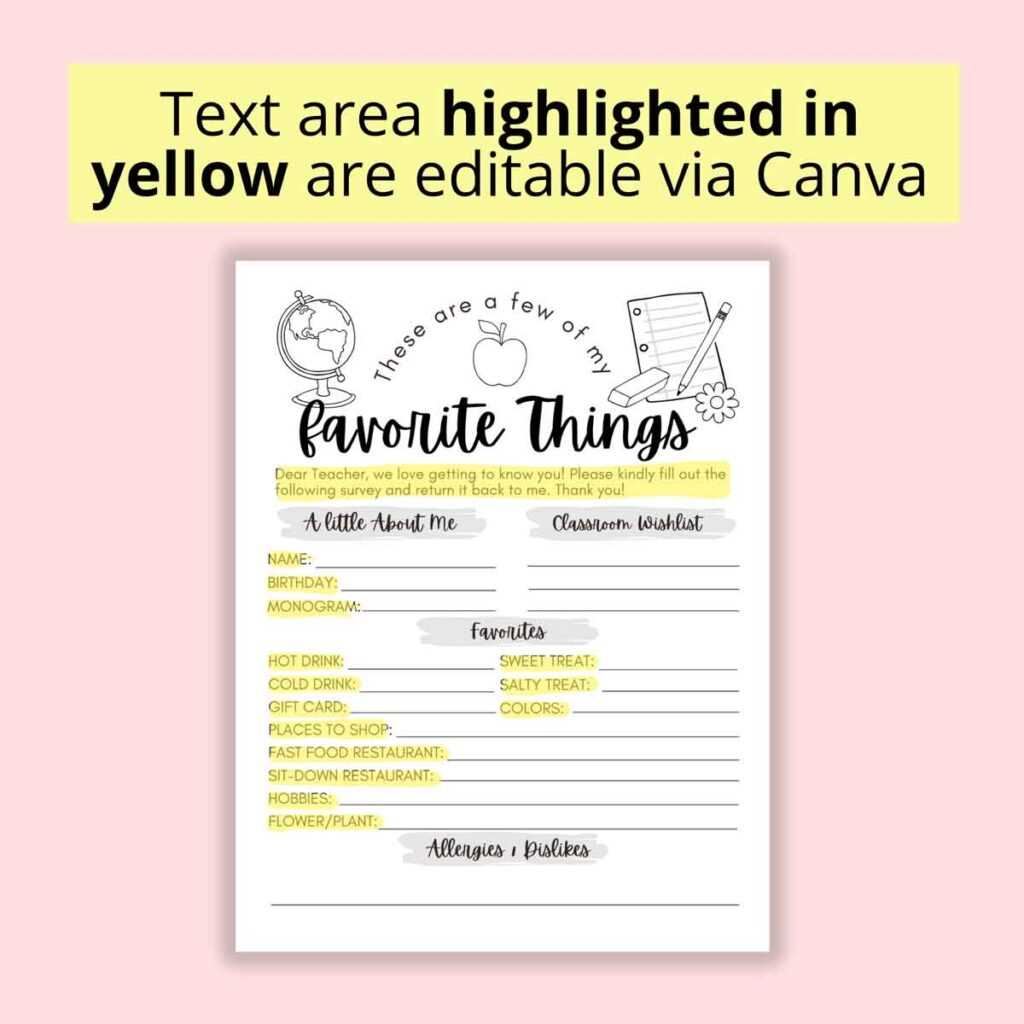
Distribute the preference questionnaire during the first two weeks of school so staff can complete it before holiday planning begins. Include targeted prompts such as coffee order, snack dislikes, classroom supply needs, and gift card choices. Short, specific fields produce clearer answers than open-ended questions and make group gift coordination much faster.
Keep completed sheets in both a shared digital folder and a labeled physical binder for quick access by room parents and PTO volunteers. Review and refresh the survey once each school year to reflect changing tastes and avoid repeating the same presents across winter events, appreciation week, and end-of-year celebrations.
What Questions to Include in a Teachers Favorite Things Form
Add a short section that captures daily beverage and snack preferences with precise fields rather than open blanks. Ask for the exact coffee order (size, milk type, sweetener), preferred tea varieties, and three go-to snacks. Include a clear “please avoid” line to flag allergies or strong dislikes; this single prompt prevents the most common gift mistakes.
Include a targeted gift card checklist with selectable options and one write-in line. Limit the list to 8–12 widely available retailers such as bookstores, office supply chains, and popular cafés. Place a ranking instruction (for example: mark top three) so organizers know what will actually be used instead of guessing from a long unchecked list.
Collect classroom supply needs with quantity guidance. Open questions like “What supplies do you need?” produce vague answers, so use structured prompts:
- Most needed classroom items (choose up to five)
- Preferred brands for markers, tissues, or wipes
- Items already overstocked (to prevent duplicates)
- Wish-list item under $25
Add a personal comfort section that focuses on practical gifting clues. Short, specific questions work best here. Ask for shirt size, preferred scents (or “no fragrance”), color preferences for accessories, and whether handmade student gifts are welcomed or limited. This prevents well-meaning but unusable presents.
Include quick lifestyle prompts that help room parents personalize group presents without crossing privacy lines. Effective examples include:
- Hobbies enjoyed outside school
- Weekend relaxation choice (reading, outdoors, movies, etc.)
- Preferred classroom reward treats for students
- Dietary notes (vegan, gluten-free, none)
Finish with one optional open response labeled “Anything else that would help with appreciation gifts.” Keep it to two lines maximum. This captures unique details–such as a beloved local café or a strong dislike of mugs–while preventing long essays that slow down gift planning.