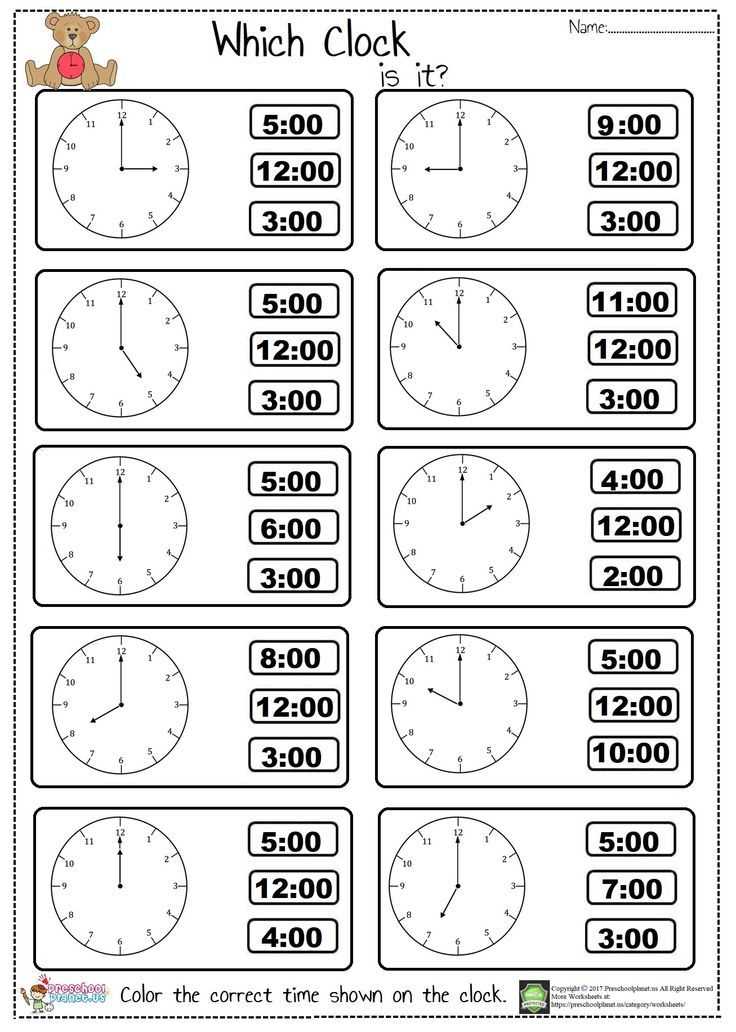
Use various clock-themed exercises to help children master both analog and digital formats. These exercises improve their ability to quickly read different types of clocks and understand time intervals.
How to Use Clock Exercises for Learning Analog and Digital Clocks
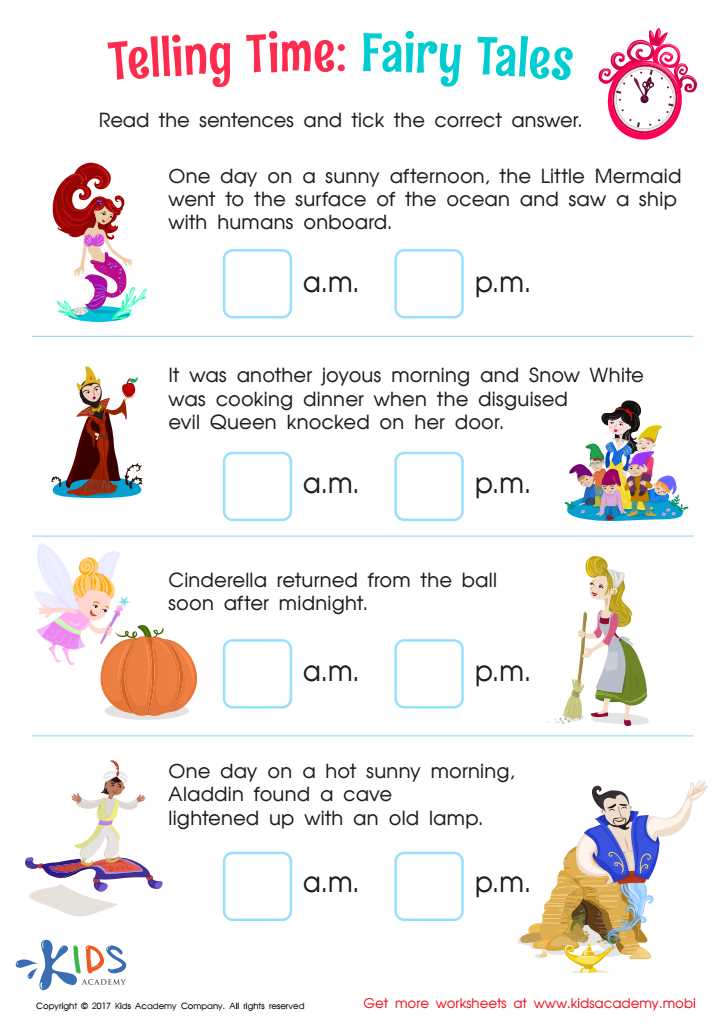
Start with basic drills where children match times shown on clocks with corresponding numbers. This helps them become familiar with the relationship between hours and minute hands, and learn to recognize the difference between AM and PM. Use fun visuals like clock faces and time labels to keep their attention.
Introduce challenges where children must draw the hands on blank clocks to match a given time. You can increase difficulty by using quarter hours, half hours, and eventually exact minutes. Once they are confident with analog clocks, begin including digital clock equivalents in the practice tasks to reinforce their understanding.
Creative Ways to Practice Time Skills
Turn clock reading into an engaging activity by incorporating it into games. One idea is to create a “time scavenger hunt,” where children are given specific times to find or act out. Another game could involve a “time relay,” where they race to match given times on a clock drawn on paper. These playful activities make learning about hours and minutes feel like an adventure.
Encourage students to keep a daily log of events, noting the time they occurred. This helps them connect the concept of time to real-world situations. For instance, a child could record the time they ate lunch, went to school, or went to bed, then reflect on the difference between events to reinforce their learning.
To further solidify their skills, incorporate technology such as digital clock apps that have interactive features. Many of these apps allow children to adjust the time hands and practice time-setting tasks, providing instant feedback for better comprehension.
As they progress, challenge them to use both formats together. For example, they could look at an analog clock and record the same time on a digital one. This dual approach helps reinforce their understanding of both types of clocks and strengthens their time-telling abilities.
Using Activities for Learning Clock Reading
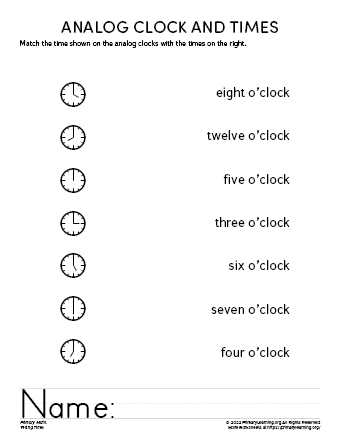
Begin with exercises where children match various clock faces with corresponding numbers. These types of exercises help them build a visual connection between the hour and minute hands, solidifying their understanding of how time is represented.
Introduce challenges that require children to draw hands on blank clock faces. This allows them to practice accurately placing the hour and minute hands to match specific times. Start with whole hours, then move to half and quarter hours to increase complexity.
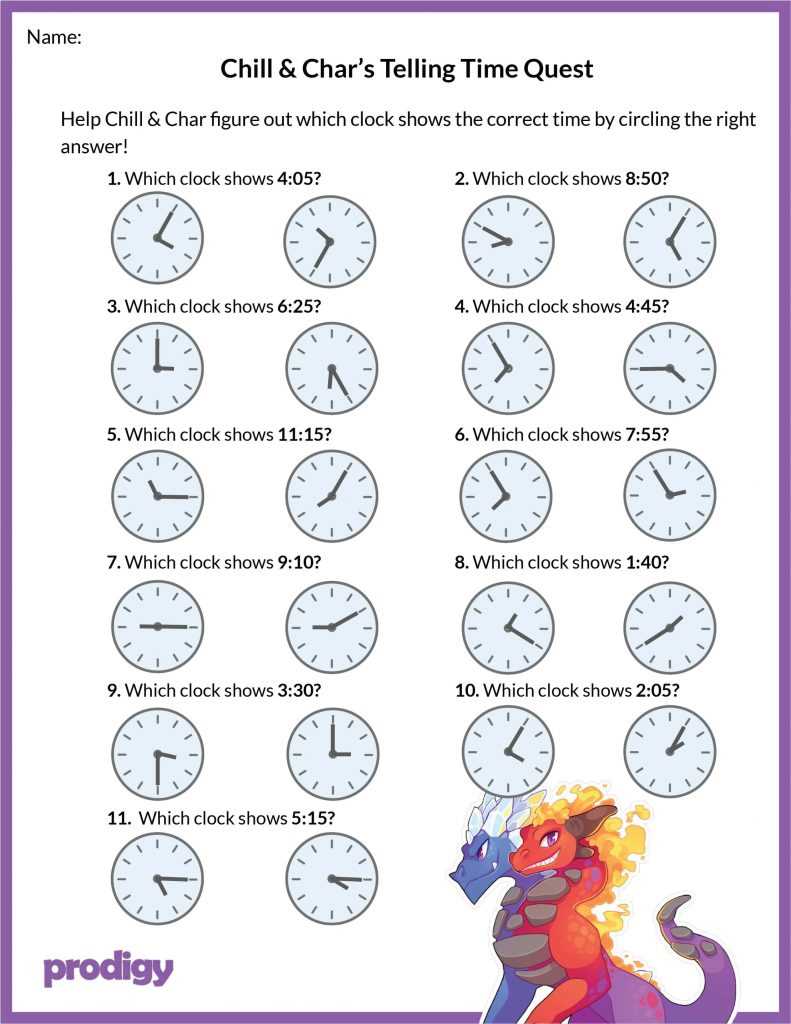
Next, incorporate digital formats into the practice. Provide examples where children need to match analog clock faces with the corresponding digital time. This helps them understand the relationship between the two types of clocks, enhancing their ability to recognize both formats easily.
To add variety, make use of engaging games like “Clock Bingo,” where children identify times called out in both analog and digital formats. Games such as these keep learning fun and help reinforce time-reading skills through repetition.
Another useful activity is having children create their own time-related schedules. For example, they could record the times of everyday events, like breakfast, school, and bedtime. This connects the concept of time to real-world situations, making it more tangible and understandable for them.
To encourage independent practice, provide interactive clock apps or websites that allow children to adjust the clock hands and see the corresponding digital time. These digital tools give immediate feedback and help reinforce learning in a hands-on way.
Introduce exercises where children practice calculating time intervals. For example, ask them how much time has passed between two different events on the clock. This will enhance their understanding of time differences and help them develop basic time management skills.
Finally, create real-life scenarios where children need to set a clock based on a given time. Have them practice by setting the time on both analog and digital clocks, which helps them become more confident and independent in reading time throughout their day.