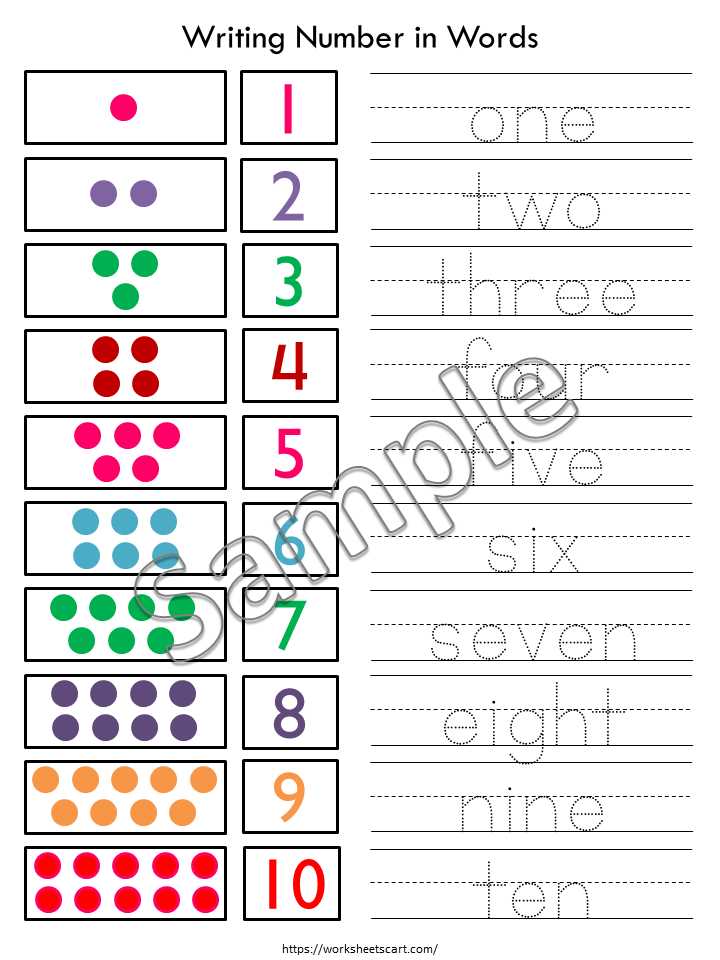
Download dotted digit worksheets in PDF format at 300 DPI and print them at actual size on A4 or US Letter paper to maintain correct proportions for early handwriting practice. Choose sheets with large, clearly spaced numerals from 1 to 10 and directional arrows that guide pencil movement from top to bottom.
Use 100–120 gsm paper for pencil work and 160 gsm stock if children will use markers. Select layouts that combine numeral outlines with small counting illustrations, such as groups of objects matching each quantity, to reinforce number recognition and quantity association. Keep stroke width between 1.5–2 pt so the guide lines remain visible but do not overpower the child’s own writing.
Organize digit practice pages by difficulty: Level 1 with single large figures per page, Level 2 with repeated rows for repetition, and advanced sheets that add simple counting tasks. Store files in labeled folders by skill stage to rotate practice materials weekly and track handwriting progress without repeating the same layouts.
Tracing Numbers 1 10 Printable
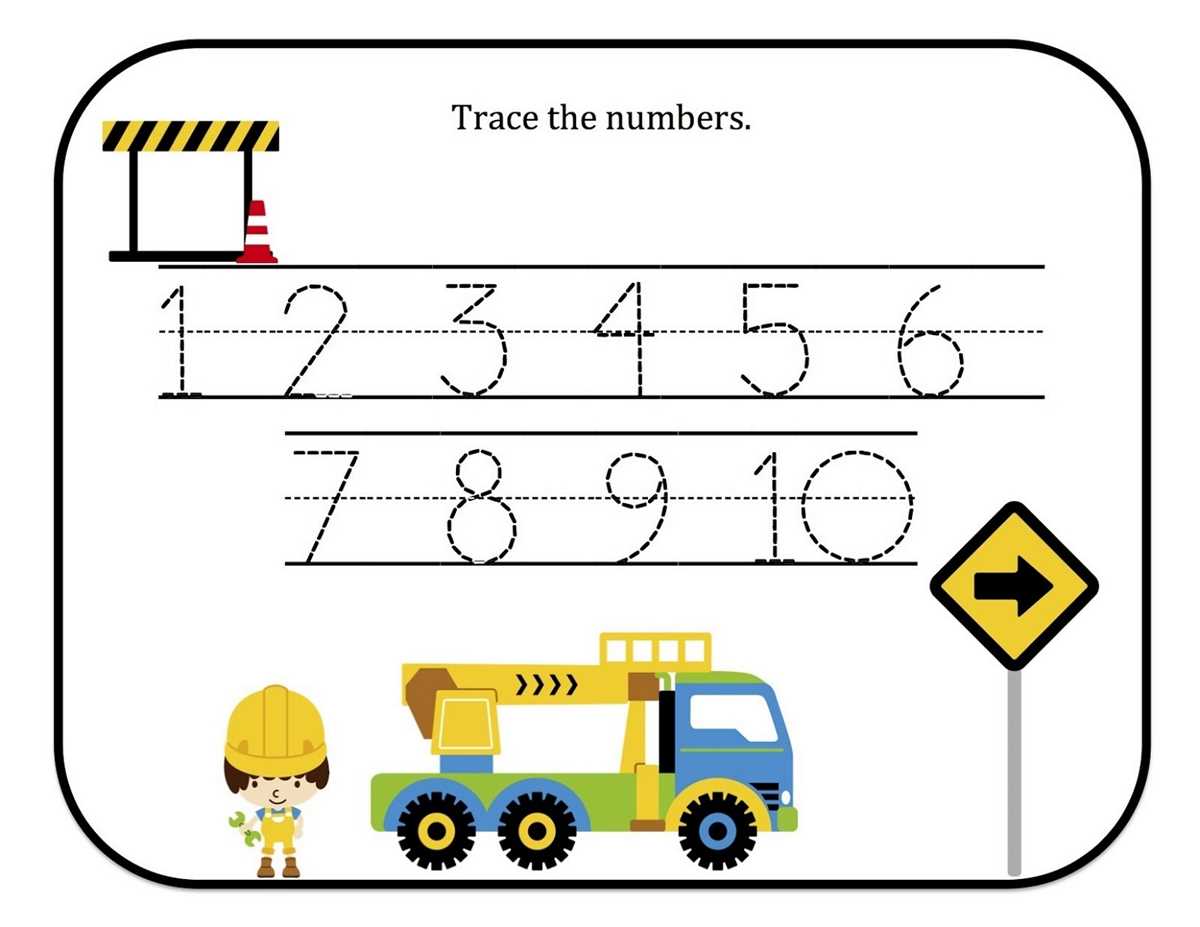
Use dotted numeral worksheets from 1 to 10 with directional arrows and starting dots to guide correct pencil movement. Select PDFs at 300 DPI and print at 100% scale to keep digit height between 4–6 cm for preschool learners developing fine motor control.
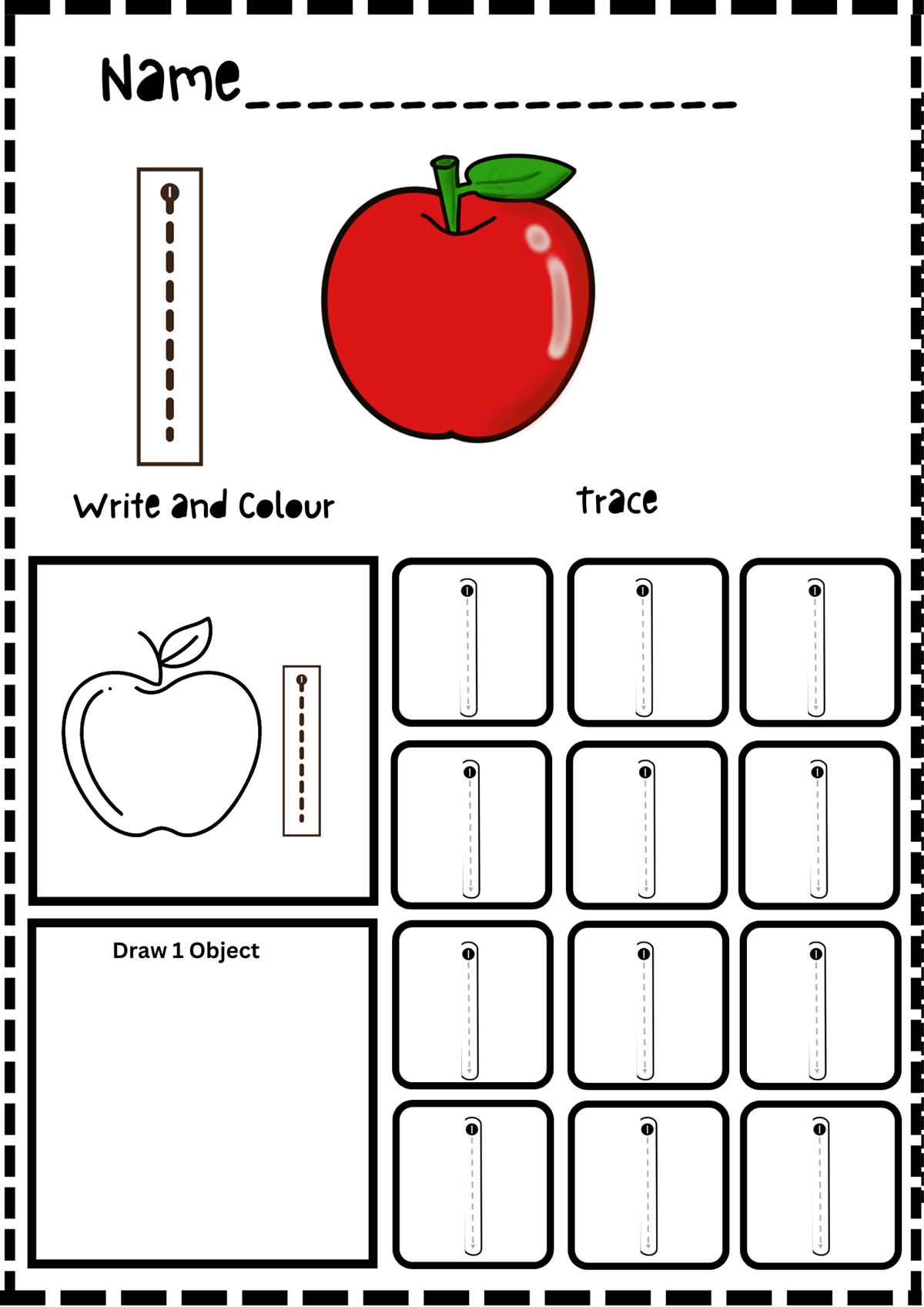
Choose layouts that place one large figure at the top followed by two or three guided practice lines. This structure allows a child to observe the model, copy it with support, and then repeat independently on the same page.
Set printer quality to high and disable page scaling to avoid distortion of proportions. Clear stroke thickness between 1.5 and 2 pt keeps outlines visible without overwhelming the child’s writing attempt.
Combine quantity visuals with each numeral, such as five apples next to the figure 5, to connect symbol recognition with counting skills. Keep illustrations simple and positioned to the right or below the main digit to prevent distraction from the writing area.
For repeated practice, laminate selected sheets and use dry-erase markers. This method allows multiple attempts without printing new copies and helps children refine hand movement through repetition.
Organize worksheets into folders labeled Beginner, Repetition Practice, and Independent Writing to rotate materials weekly and track improvement across stages from guided strokes to freehand numeral formation.
How to Choose Tracing Numbers 1 10 Printable by Age and Skill Level
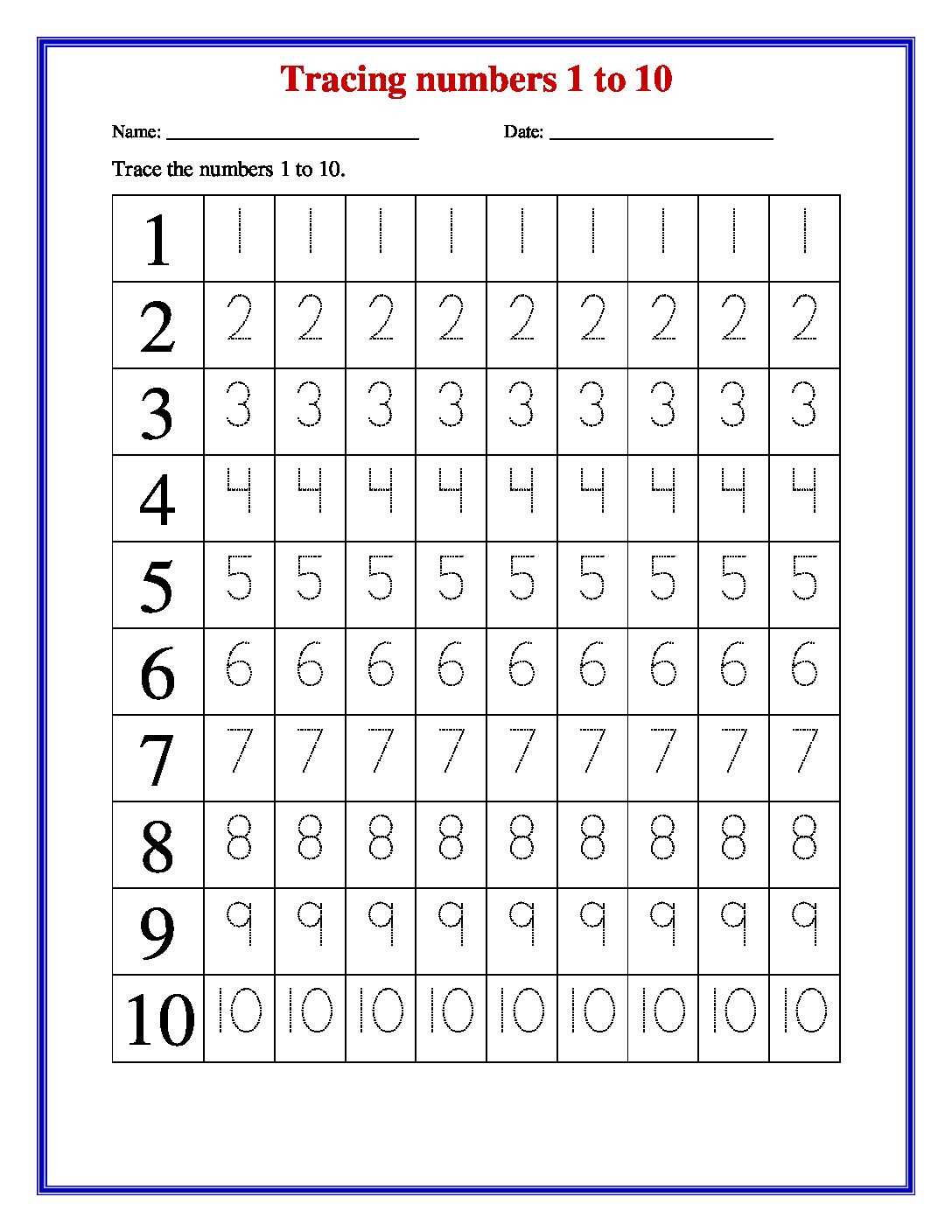
Select digit practice sheets with large 5–6 cm tall figures and wide spacing for children aged 3–4 who are just learning pencil control. Look for bold dotted outlines, clear starting points, and single-character focus per page to reduce visual overload and support basic hand coordination.
For ages 4–5, choose worksheets that include two to four guided rows per numeral along with small counting images placed away from the writing lines. Moderate detail and repeated stroke paths help reinforce correct formation while maintaining attention span.
Children ready for independent writing benefit from layouts that fade the dotted guides after the first line and provide blank ruled space below. This transition format encourages recall of shape structure without constant visual prompts.
Review stroke direction indicators before downloading any PDF file. Sheets without arrows or sequence marks may lead to incorrect formation habits that are harder to correct later. Keep files sorted by stage–beginner control, guided repetition, independent formation–to match each learner’s current ability rather than age alone.