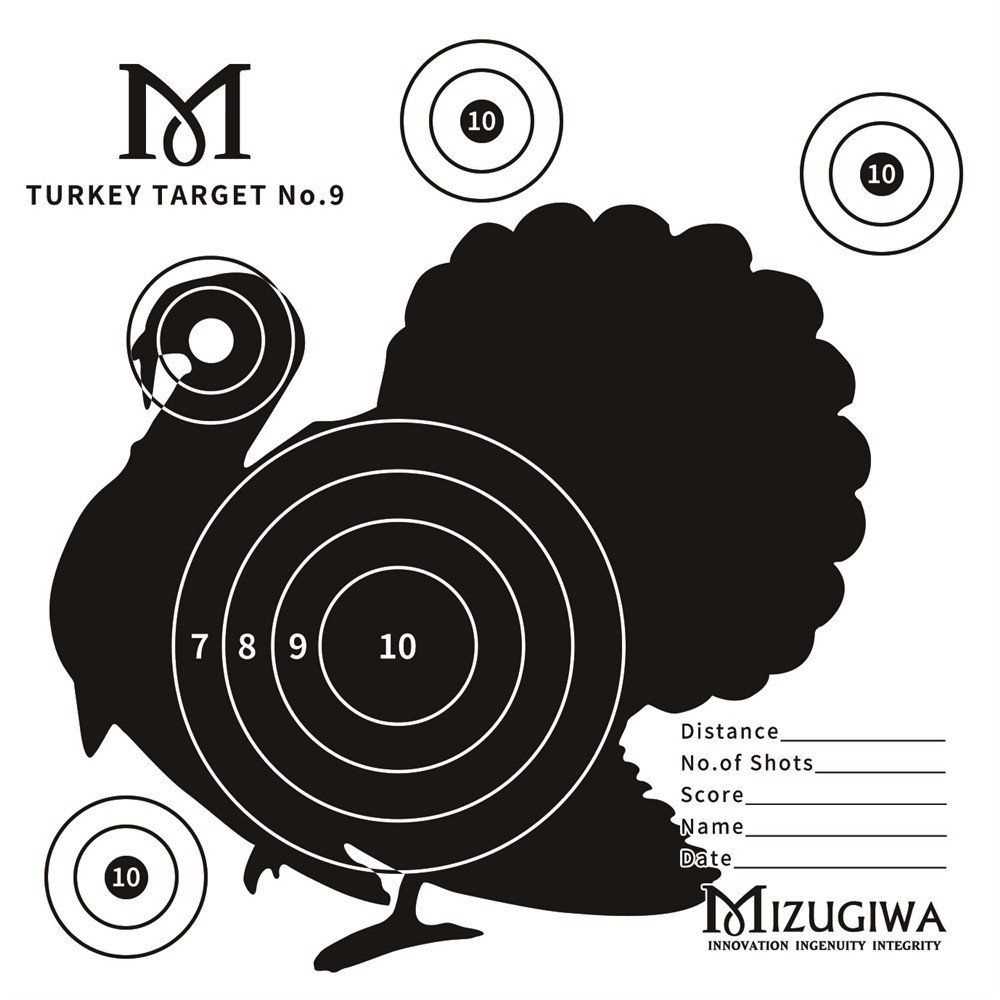
Print the bird silhouette sheet at 100% scale and confirm dimensions with a ruler before heading to the range. The head and neck zone should measure close to 6–7 inches in height on a life-size layout, matching an adult gobbler’s vital area for realistic shotgun pattern testing.
Mount the paper aim point on a firm cardboard backing to prevent tearing and place it at shoulder height, about 36–40 inches from the ground. Position the stand at 30, 40, and 50 yards to compare pellet spread. Use a 12-gauge shotgun with loads commonly rated between #4 and #6 shot and record the number of strikes within the head-neck outline for each distance.
Count pellet impacts inside the marked vital zone and aim for at least 100 hits at 40 yards for dense coverage. If the pattern appears sparse or uneven, test a different choke tube such as improved modified or full constriction and repeat the same distance sequence to compare grouping consistency.
Turkey Targets Printable
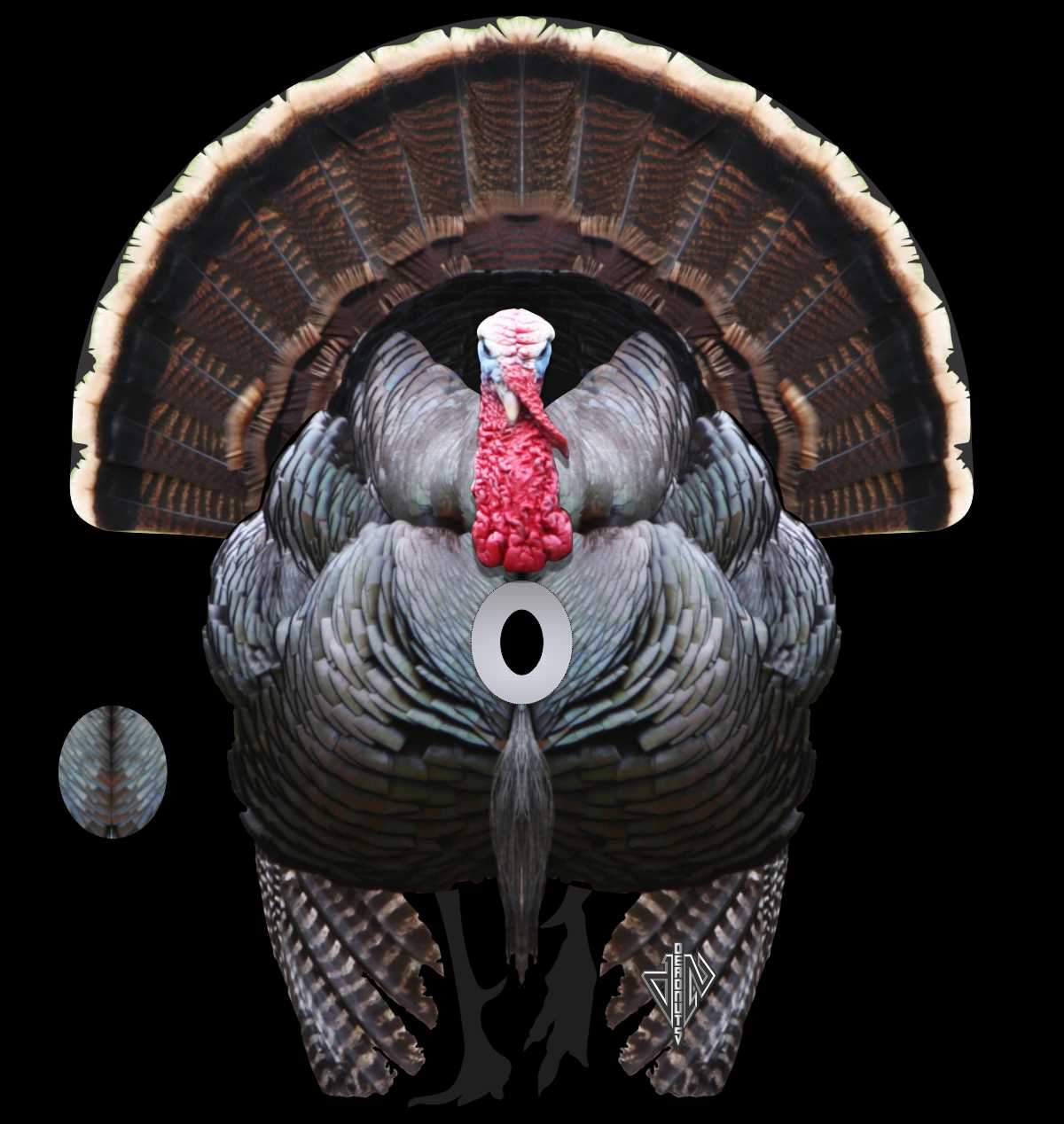
Use a full-scale wild gobbler silhouette sheet and verify that the head and neck scoring zone measures approximately 6 inches wide and 7 inches tall before testing your shotgun setup.
Attach the paper bird outline to corrugated cardboard at least 24×36 inches to capture the entire pellet spread. Place the stand at measured distances of 30, 40, and 50 yards using a laser rangefinder for accuracy. Fire one round per sheet to avoid overlapping patterns. Mark each shot with the choke type, shell length, shot size, and muzzle velocity. For a 12-gauge with #5 lead shot, expect dense coverage inside the cervical spine area at 40 yards when using a full constriction tube around 0.690–0.700 inches.
Count pellet strikes within the head and upper neck zone and record the total. A consistent hunting setup should deliver at least 90–120 hits in that region at 40 yards, depending on load and barrel length.
If the pattern shifts left or right by more than 3 inches at 30 yards, adjust optic alignment or bead position and repeat the same distance test with identical ammunition to confirm correction.
How to Print Turkey Silhouette Sheets at Correct Scale for Shotgun Patterning
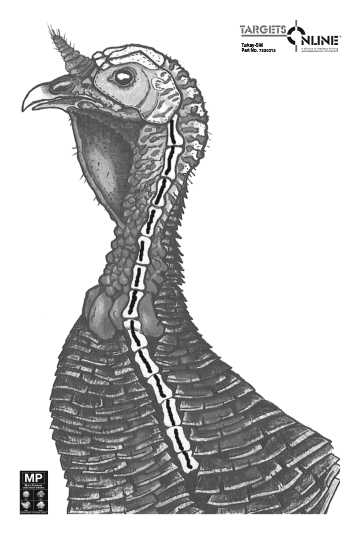
Set the PDF viewer to 100% scale and disable page fitting before sending the file to the printer. After printing, measure the reference square on the sheet; it should match the stated dimension, typically 1×1 inch or 5×5 cm. If the measurement is off by more than 1 mm, adjust scaling settings and reprint until the outline matches real bird proportions.
Choose paper size that supports full-body layout, such as ANSI D (22×34 inches) or tiled letter pages that can be taped together without gaps. Align trim marks carefully and secure seams on the back side with flat tape to avoid raised edges that may deflect pellets during pattern testing. Use paper weight between 90 and 120 g/m² so the sheet resists tearing yet remains easy to mount on cardboard.
Confirm that the head and neck zone height measures close to 6–7 inches on a life-size version, reflecting adult gobbler anatomy. Accurate scaling ensures pellet density results correspond to real hunting distances and prevents misleading pattern evaluation.