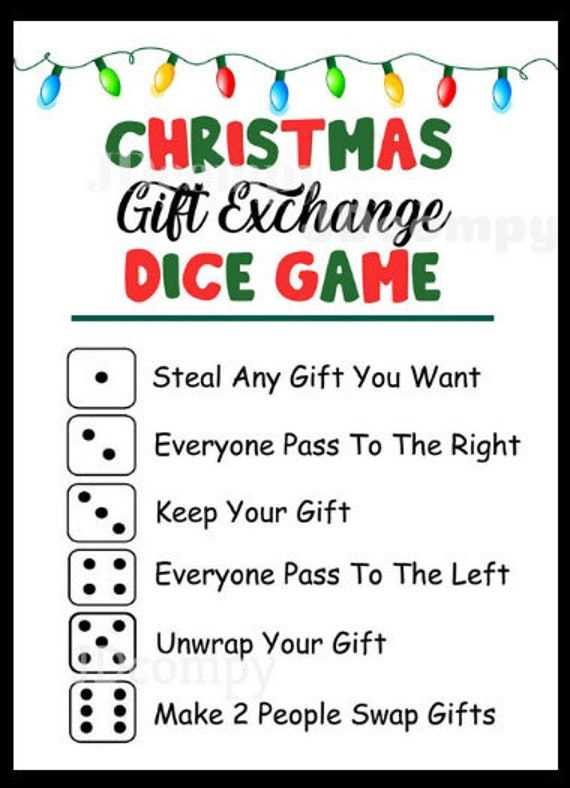
If you’re organizing a fun and unpredictable holiday game, make sure everyone knows the exact process before the event starts. Downloading or printing the step-by-step guidelines ensures smooth gameplay and avoids confusion during the swap. Setting clear expectations can make the game even more enjoyable for everyone involved.
To start, determine the maximum value for items participants can bring. This prevents someone from feeling left out if they’re on a budget or, conversely, avoids any extreme disparities in gift value. Next, decide how many rounds you’ll have, with each person selecting and possibly swapping an item from the pile. Keep the rules simple and transparent for maximum participation.
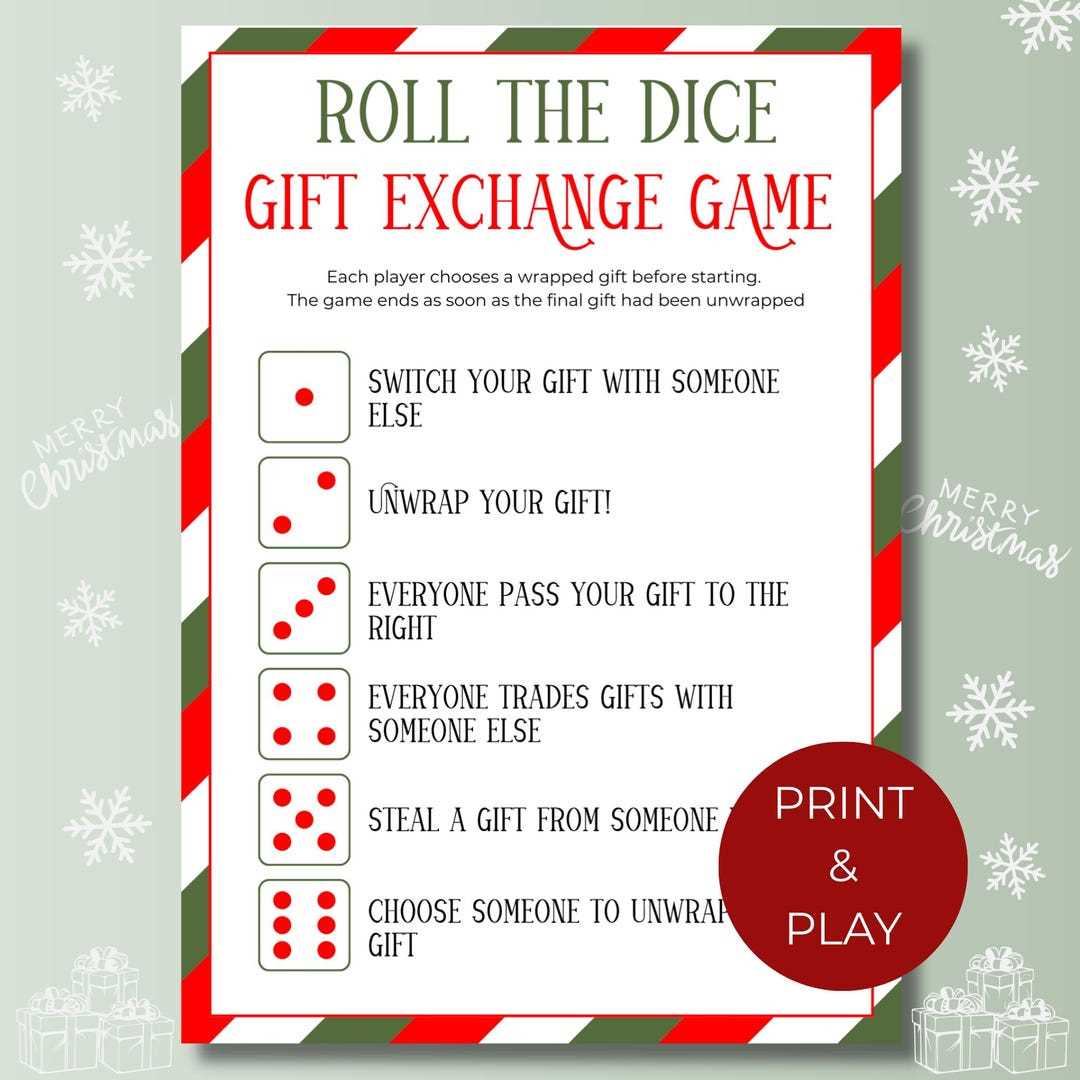
Don’t forget to have a printed copy of the instructions ready. This ensures no one forgets the specifics of how the game is played, like how many times a gift can be stolen or if there’s a limit on how many people can take part in one round. Everyone will appreciate having easy access to a guide, especially if it’s their first time playing this interactive holiday tradition.
How to Set Up and Use a Gift Swap Guide

Begin by establishing a value limit for the items. This is crucial to ensure fairness, making sure no one feels uncomfortable with overly expensive or too inexpensive presents. Set a cap on the maximum amount participants can spend and inform everyone ahead of time.
After setting the price range, create a list of guidelines. A printed copy of these instructions will help everyone understand how the game progresses and prevent any confusion during play. This will also make it easier for first-timers to feel confident in their participation.
Decide how many rounds you’ll have. Typically, each round involves someone picking an item from the pile or “stealing” a previously chosen one. You can limit the number of times an item can be taken to keep things fun and balanced. For example, a gift can only be stolen twice before it’s locked in with the final owner.
Make sure everyone knows how to handle duplicates. If two people pick similar or identical items, encourage a quick trade or swap. This keeps the game moving and ensures no one feels stuck with a boring present.
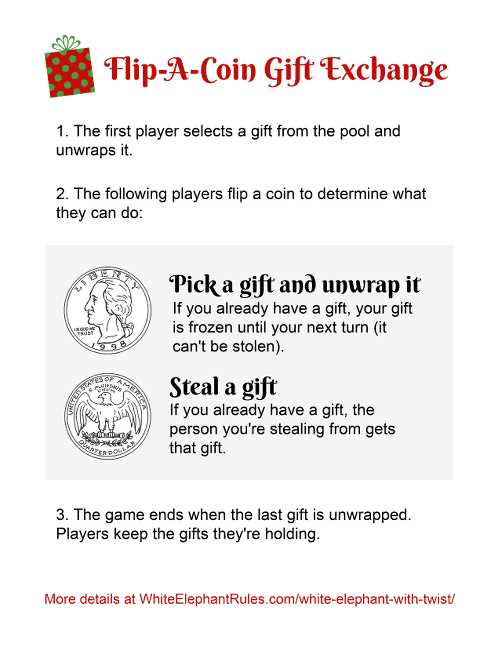
Consider introducing special rounds or twists, like allowing a second steal after a specific number of rounds. This adds extra unpredictability to the game and keeps participants on their toes. Make sure to include this variation in your printed instructions so everyone is aware of the change before it happens.
For those hosting virtually, you can send a digital version of the game instructions to participants beforehand. Even if they aren’t physically present, everyone can still participate equally and understand how the process works.
Make the experience more exciting by adding small challenges during the game. For example, players can only pick a present after performing a simple task like telling a joke or answering a fun trivia question. This small twist makes the game even more entertaining.
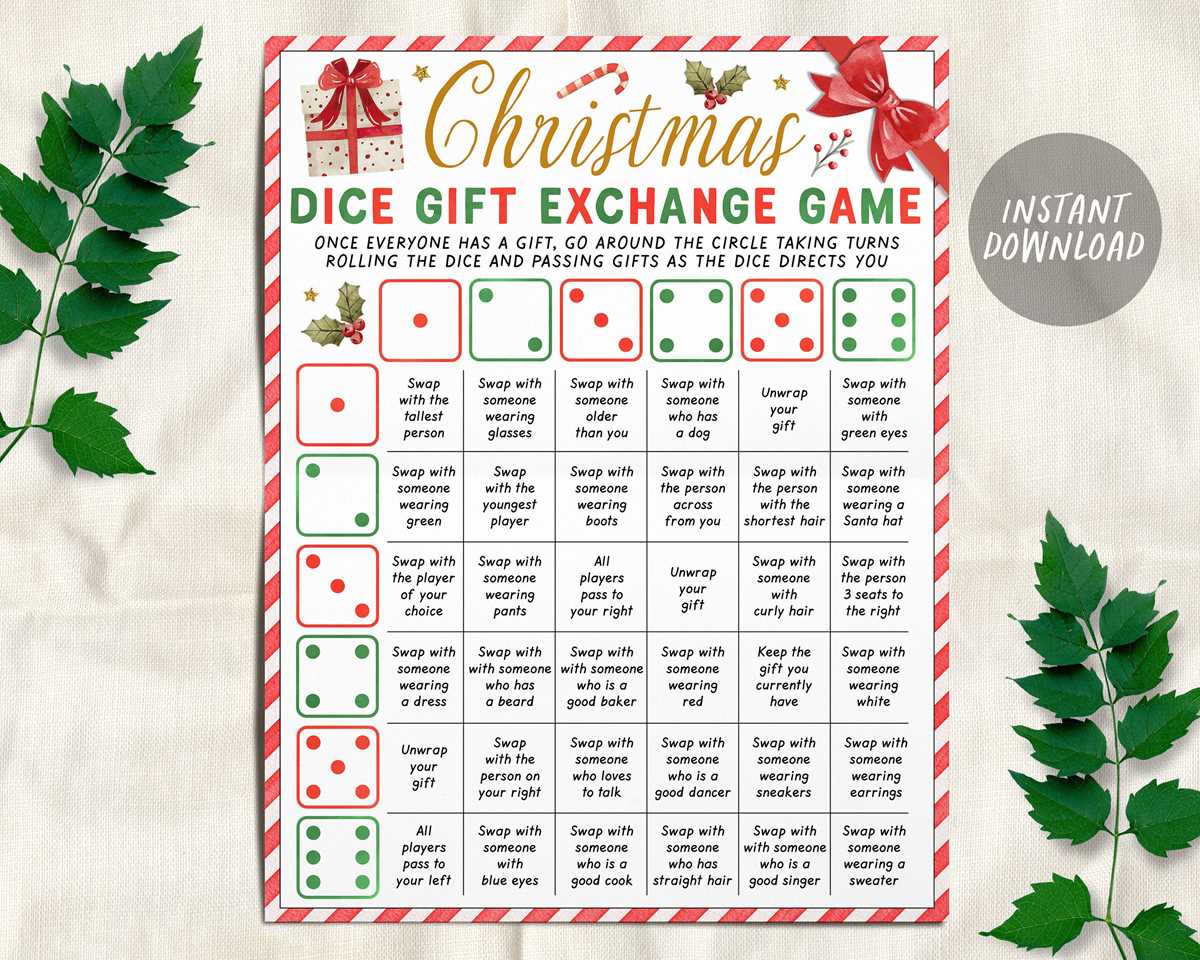
Finally, keep the printed guide clear and concise. List the steps in a logical order, and avoid overly complicated wording. Make sure to highlight the key points–such as how to “steal” and the maximum number of steals per gift–so that everyone can follow along easily without needing constant clarification during the game.