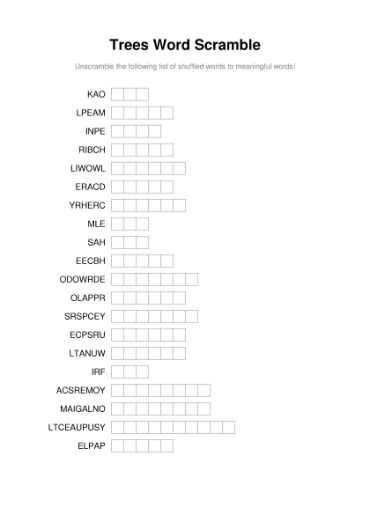
Start by choosing a theme or topic for your puzzle. Popular categories include animals, food, sports, or even specific holidays. Selecting a relevant theme will make the game more enjoyable and challenging for participants.
Step-by-Step Guide for Crafting Customized Puzzles
Begin by selecting 10-15 words related to your chosen theme. For instance, if you choose “animals,” pick words like “elephant,” “giraffe,” “kangaroo,” etc. Once you have your list, write each word and scramble its letters to create a challenging but solvable puzzle.
After scrambling the words, ensure that each word can still be deciphered. The goal is to create a puzzle that’s difficult but not impossible. You can adjust the level of difficulty by varying the word length or the complexity of the letter arrangement.
Where to Find Free Templates for Word Puzzles
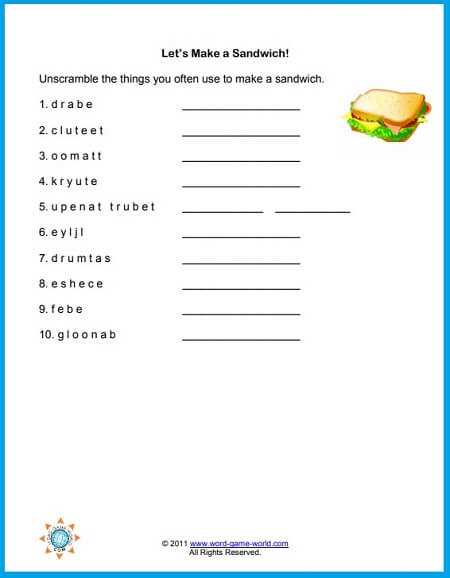
If you’re looking for printable templates to save time, many online resources offer free puzzle templates. Websites such as Puzzle-Maker.com or Education.com provide easy-to-use tools where you can input your words and generate puzzles instantly. These templates can be printed and handed out at any event, from classrooms to family gatherings.
To make the game even more interactive, you can also add a time limit or offer small rewards for the fastest solver. This added competition adds a fun twist for players and encourages engagement.
Another useful tip is to combine the puzzle with other types of activities. For example, after solving the puzzle, players can move on to a related quiz or challenge, keeping the experience fresh and stimulating.
By using these steps and resources, you can create unique word puzzles for any occasion and ensure that everyone has fun while sharpening their language skills.
How to Create Custom Puzzles for Fun and Learning
To make engaging and fun challenges, start by selecting a theme relevant to the group. Choose a mix of common and uncommon words that fit the topic. For example, if the theme is “sports,” use words like “basketball,” “soccer,” and “baseball.” Write each word and then scramble the letters. To increase difficulty, you can also add in some distractions, such as similar-looking letters or tricky combinations.
Once you have your list of mixed-up words, consider using online tools to format them into clean, easy-to-read worksheets. These platforms allow you to input the words and instantly generate puzzle sheets that are ready to print and distribute. Adjust the puzzle’s complexity based on the audience, whether it’s children, adults, or a mixed group. Make the experience interactive by adding a competitive element, such as a time limit or a prize for the fastest solver.