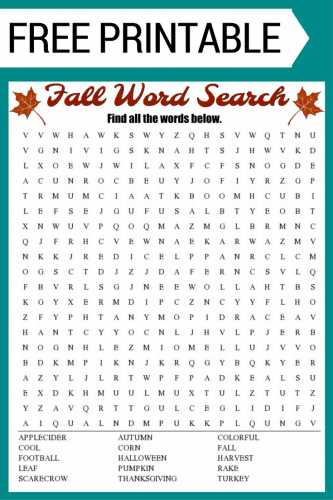
Start by incorporating fun challenges that allow learners to connect letters, form words, and decode hidden messages. These activities stimulate cognitive skills and enhance language comprehension in an interactive way. Design these exercises with themes that interest the child, such as animals, sports, or nature, to make the experience more enjoyable.
Another great idea is creating tasks where students must identify synonyms or antonyms of given words. These types of activities boost both vocabulary and reasoning skills. Pairing word matching with a simple reward system can further motivate learners to continue practicing.
For a more advanced challenge, use mixed activities that combine letter recognition with problem-solving. These may include filling in missing letters, completing partially scrambled words, or finding words hidden in a grid. These formats keep the exercises fresh and maintain the child’s interest over time.
Fun and Engaging Exercises for Vocabulary Development
Create a variety of activities where children must search for hidden terms in grids. These tasks not only improve spelling but also enhance cognitive recognition of word patterns. Start with simple grids and gradually increase the difficulty by adding more letters and longer words.
Another helpful approach is to design challenges where learners match definitions with the correct terms. This can be achieved by listing simple definitions and asking the child to choose the corresponding word from a set. This promotes not only recognition but also understanding of word meanings.
For a more advanced task, combine letter jumbles with clues, requiring the student to unscramble letters to form the correct term. Offering multiple clues, such as hints or a limited number of attempts, can make the challenge exciting without becoming too difficult.
- Start with simple 3-5 letter words for younger learners.
- Use thematic categories like animals or food to create context for each exercise.
- Gradually introduce multi-word sentences for older children to decode.
How to Create Custom Word Search and Crossword Puzzles
Start by selecting a theme for the activity. For example, focus on animals, seasons, or holidays. This will give a clear structure to your list of terms and make the task more engaging for learners.
For a word search, create a grid large enough to accommodate the words you’ve selected. Arrange the words horizontally, vertically, or diagonally, ensuring they don’t overlap too much, which might confuse the solver. Fill in the remaining spaces with random letters.
To make the task more challenging, include a mix of short and long words, or use obscure terms that relate to your chosen theme. For example, in an animal-themed activity, you could add “kangaroo,” “elephant,” and “armadillo.” This variation will increase the difficulty and keep the learners engaged.
When designing a crossword, write clues that align with the difficulty level of your audience. For younger learners, use simple, direct clues like “A large animal with a trunk” for “elephant.” For older students, you can include more complex hints that require deeper thinking.
Draw a grid for the crossword, making sure each word fits properly and intersects with others. After laying out the words, write the clues on a separate list. You can also offer a hint for each word, like providing the first letter or a part of the word.
Once both activities are ready, test them yourself or ask someone else to solve them. This will help you identify if any clues are unclear or if words in the grid are too hard to find.
- Make sure the grid fits the number of words you want to include.
- Use both familiar and challenging terms to keep learners engaged.
- Ensure all clues are clear and unambiguous.